Psychology4 min readOctober 14, 2026
Overtrading and Revenge Trading: Breaking the Cycle of Impulsive Losses
Overtrading and revenge trading destroy more accounts than bad strategies. Learn to recognise the warning signs, break the emotional loop, and set daily rules that protect you.
Overtrading and Revenge Trading: Breaking the Cycle of Impulsive Losses
What Is Overtrading?
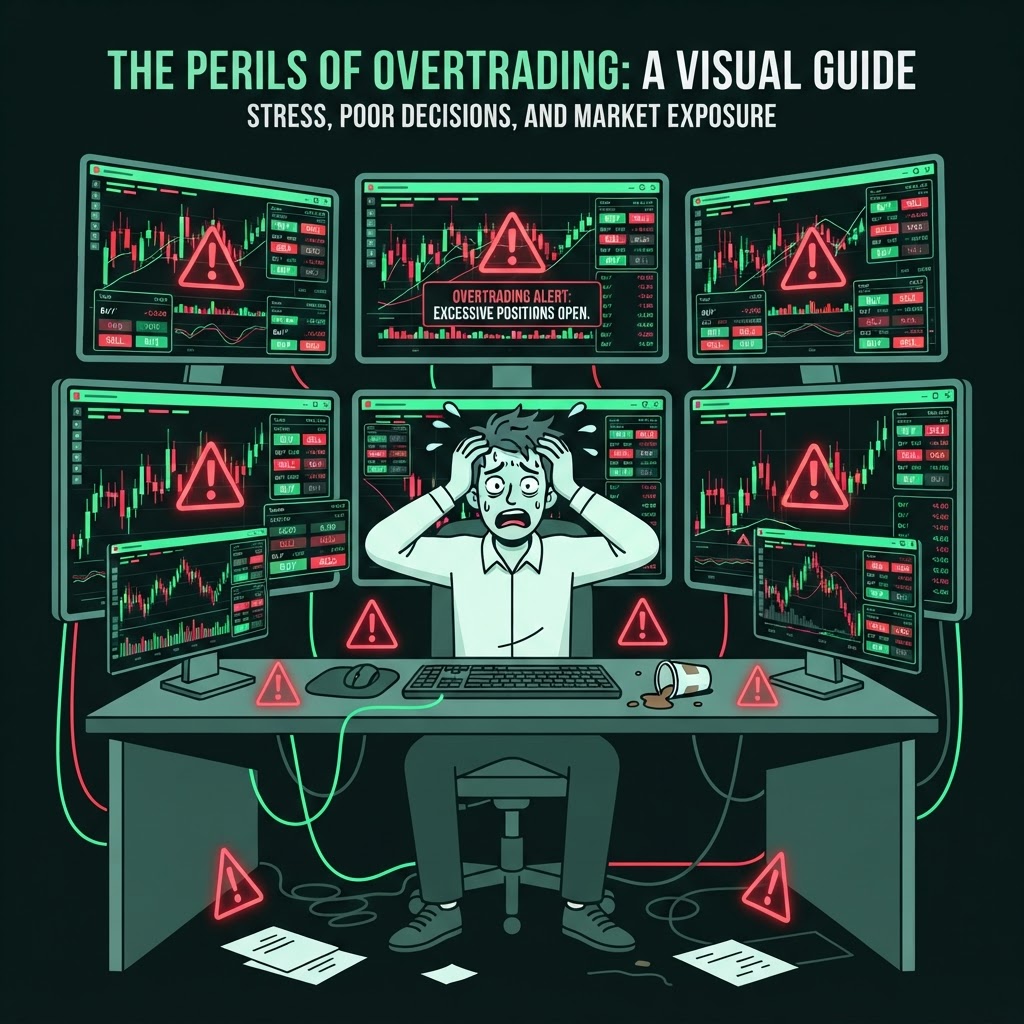
Overtrading means taking more trades than your plan justifies, often from boredom, excitement, or a need to be in the market. Each low-quality trade adds costs and lowers expectancy.
The Revenge Trading Loop
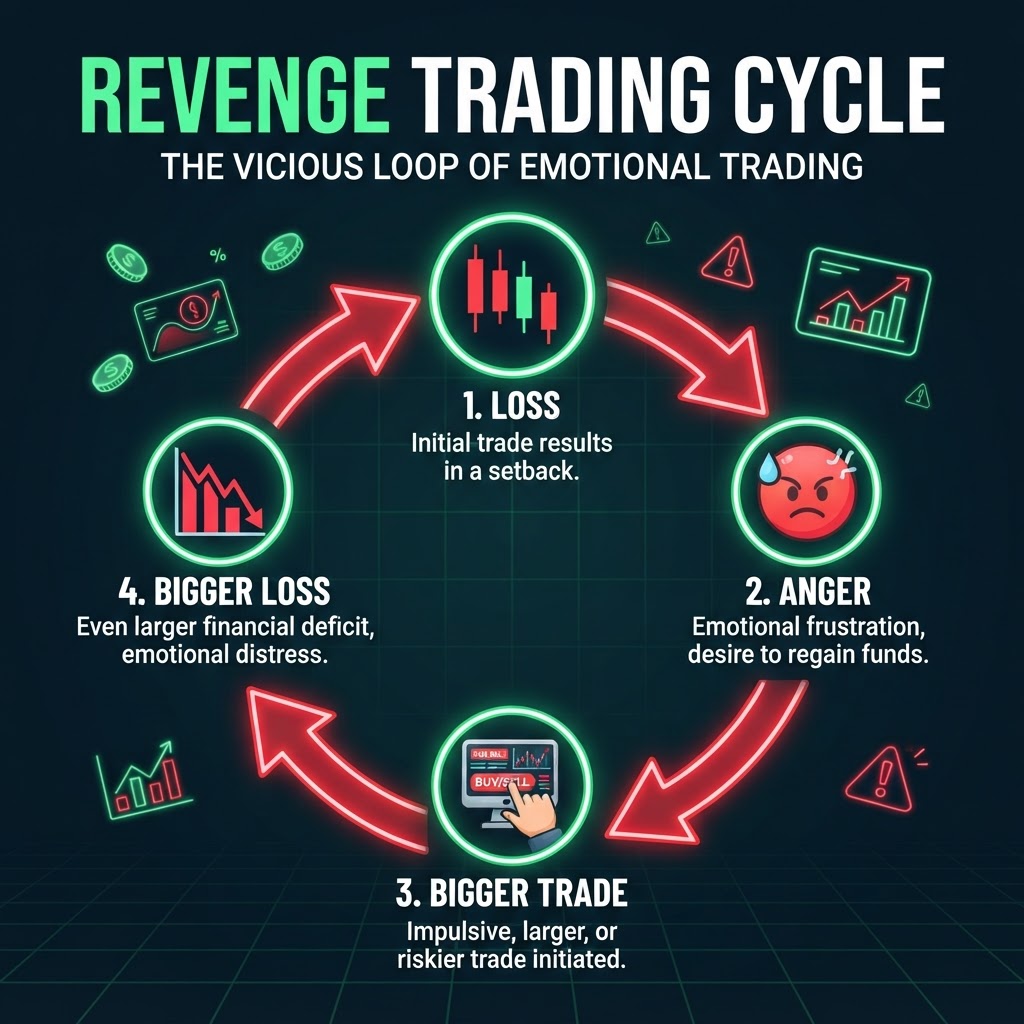
After a loss, frustration pushes traders to enter a bigger trade to win it back quickly. That trade is usually unplanned, so the next loss is larger, and the cycle intensifies.
Warning Signs
- Entering without a written reason
- Increasing size after a loss
- Trading outside your usual sessions
- Watching charts for hours looking for anything
Daily Rules That Protect You
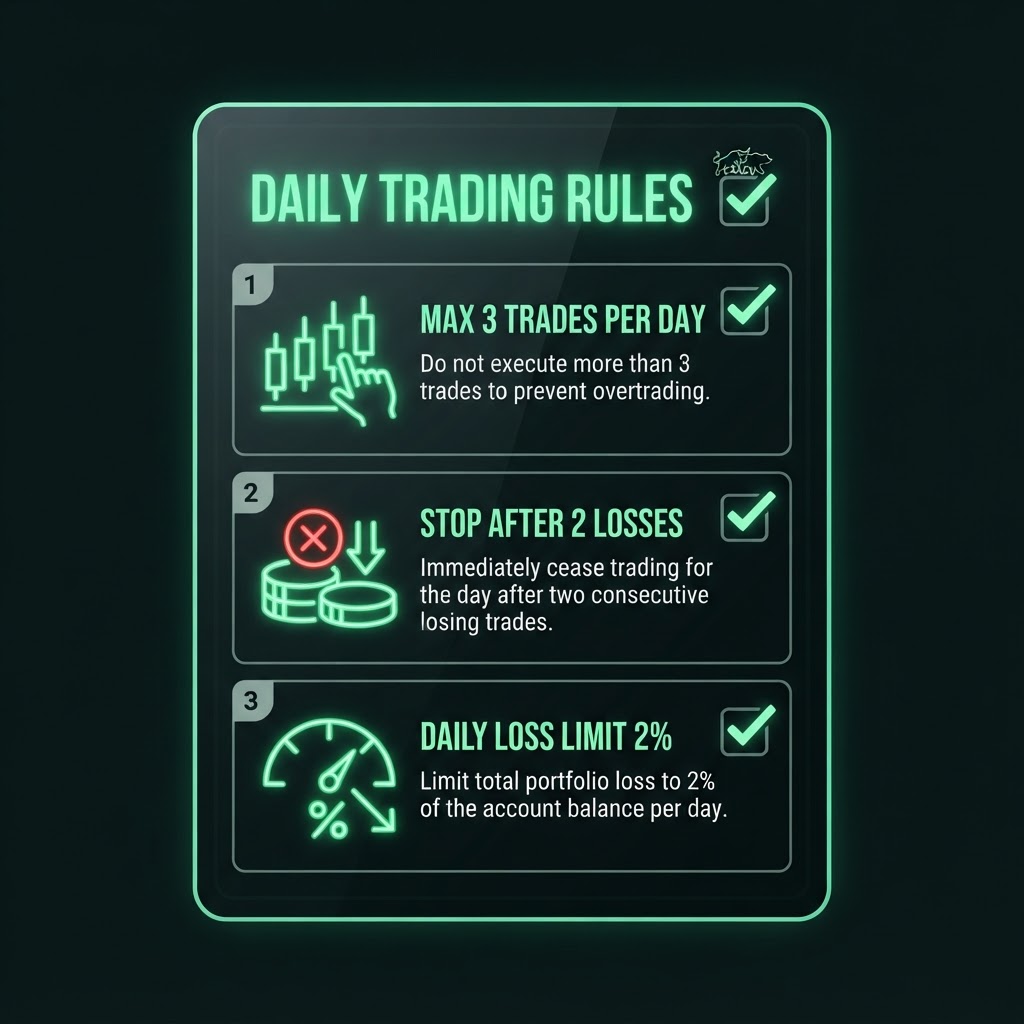
- Maximum 3 trades per day
- Stop trading after 2 consecutive losses
- Daily loss limit of 2% of the account
- Mandatory 15-minute break after any loss
Write these rules down and treat them as non-negotiable.
Measure the Damage
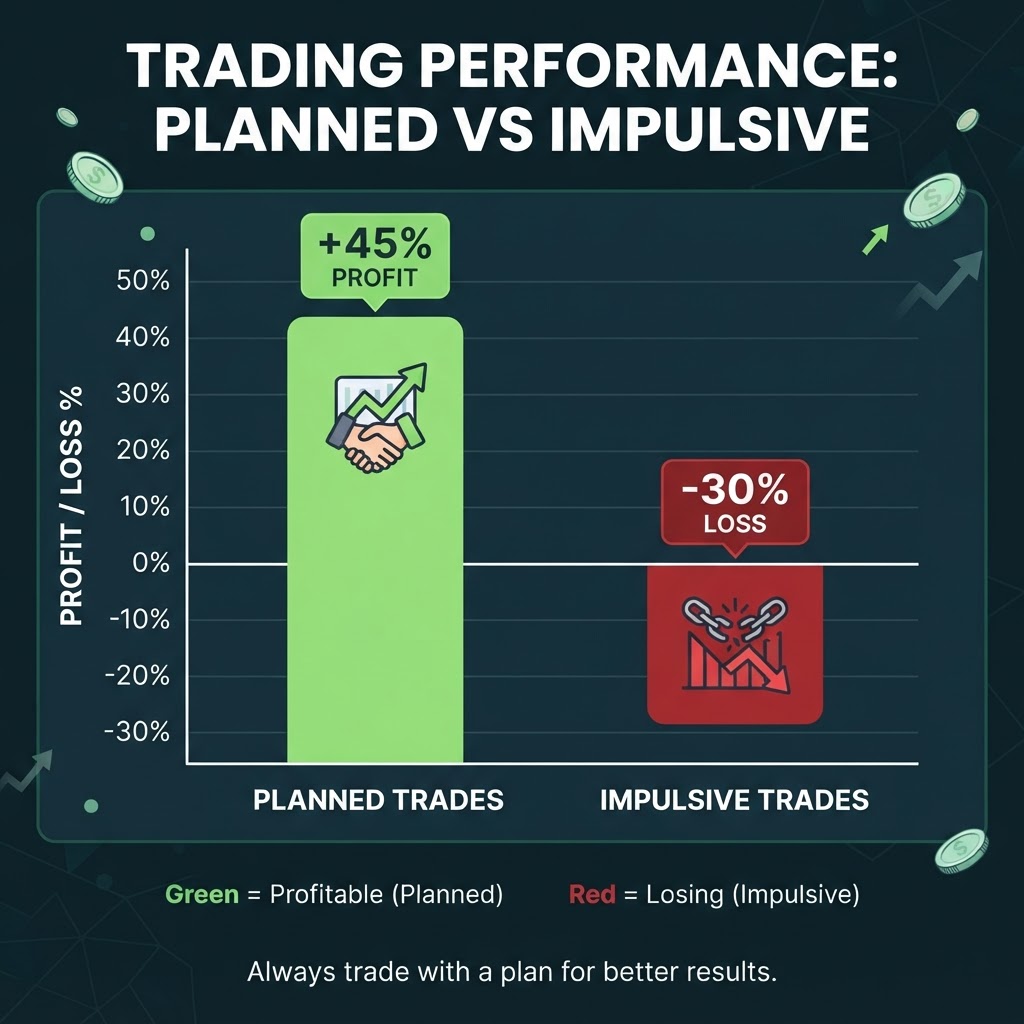
Tag each journal entry as planned or impulsive. Most traders find planned trades are profitable while impulsive ones erase those gains. Seeing it in your own data is powerful motivation to change.
Educational content only. Trading forex involves significant risk and is not suitable for every investor.