Bond Yields and Currencies: How Interest Rate Spreads Drive Forex
Bond Yields and Currencies: How Interest Rate Spreads Drive Forex
Why Yields Matter to Forex
Investors seek the best return for a given risk. When a country's bond yields rise relative to others, its assets become more attractive and demand for its currency often increases.
Watching Yield Spreads
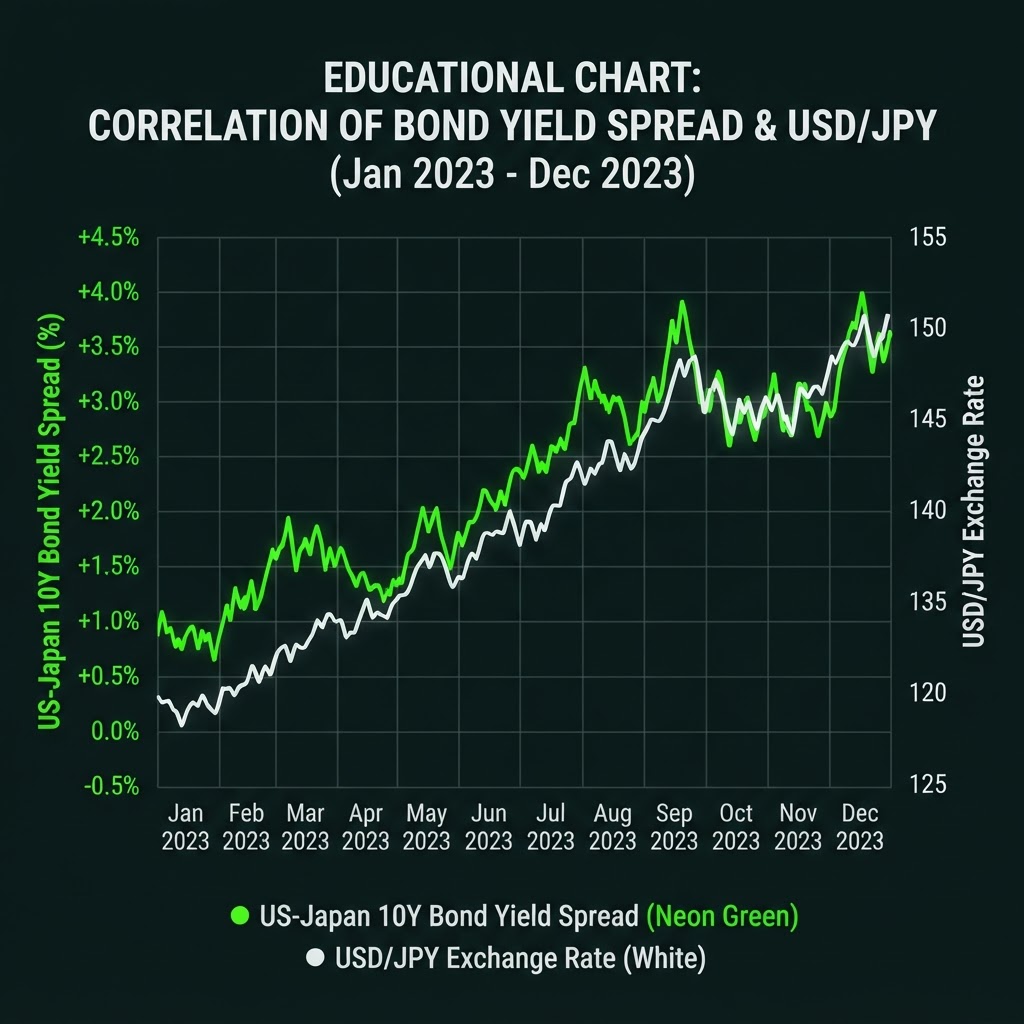
The yield spread is the difference between two countries' bond yields. The US-Japan 10-year spread has historically tracked USD/JPY closely. A widening spread in favour of the US tends to support USD/JPY.
How Capital Flows Work
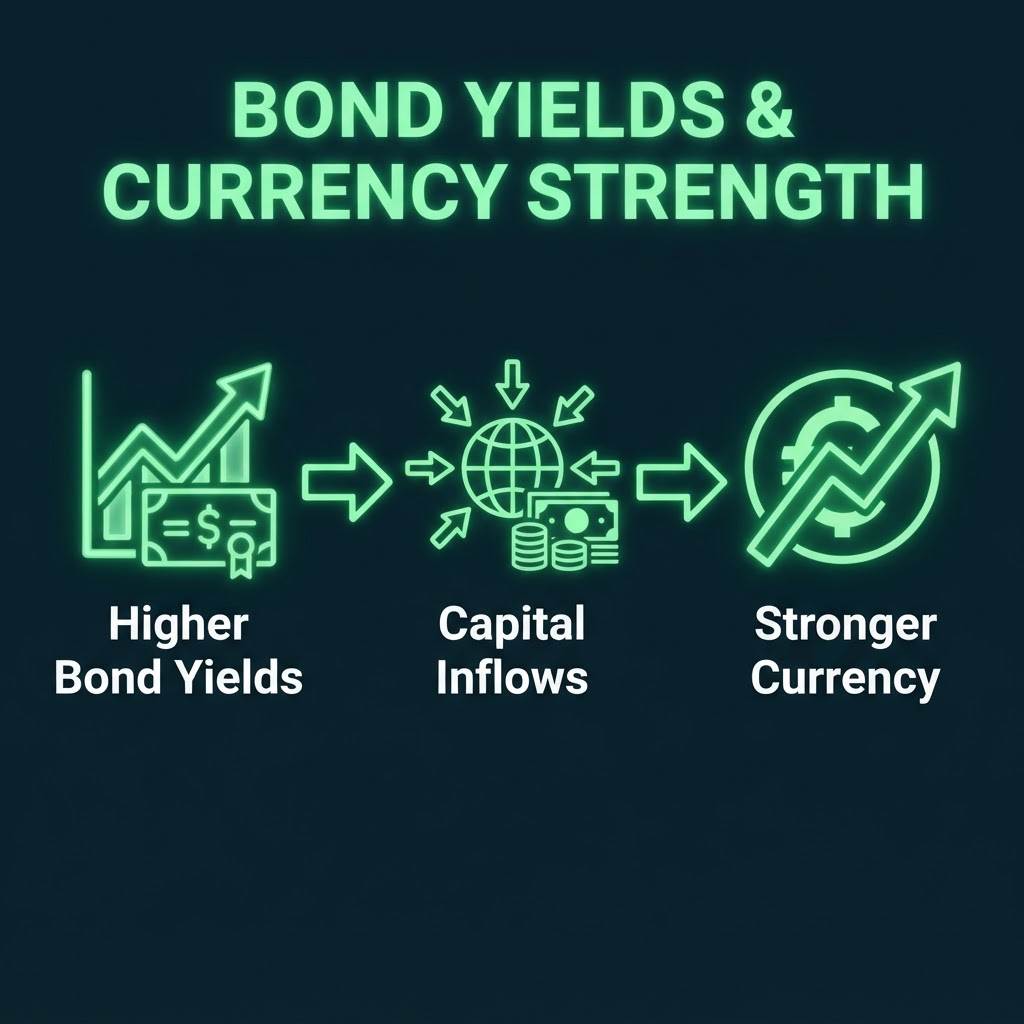
Higher yields lead to capital inflows, which create currency demand and a stronger exchange rate. Expectations matter most: markets move on what yields are expected to do after central bank decisions.
The Yield Curve
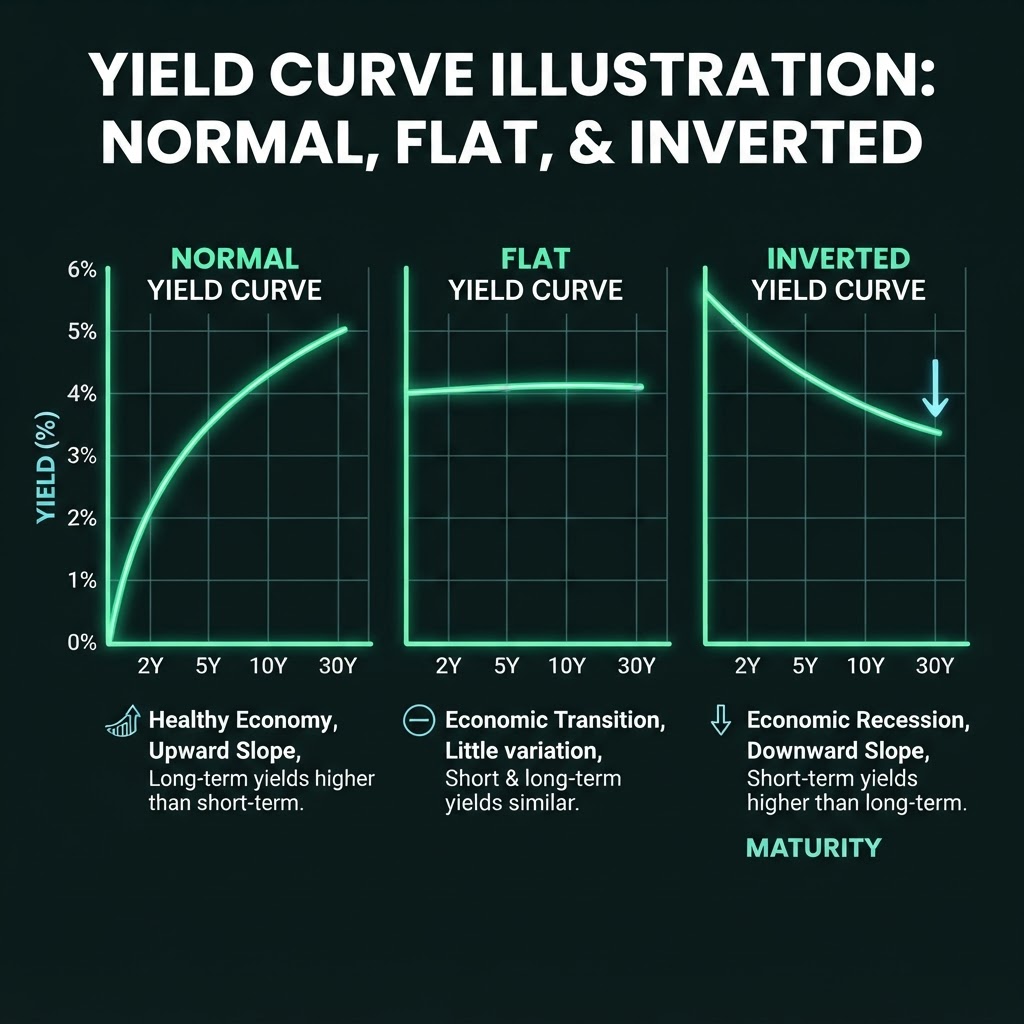
- Normal: long-term yields above short-term, healthy growth expectations
- Flat: uncertainty
- Inverted: short-term above long-term, often a recession warning
An inverting curve can shift sentiment toward safe havens.
Risk Sentiment
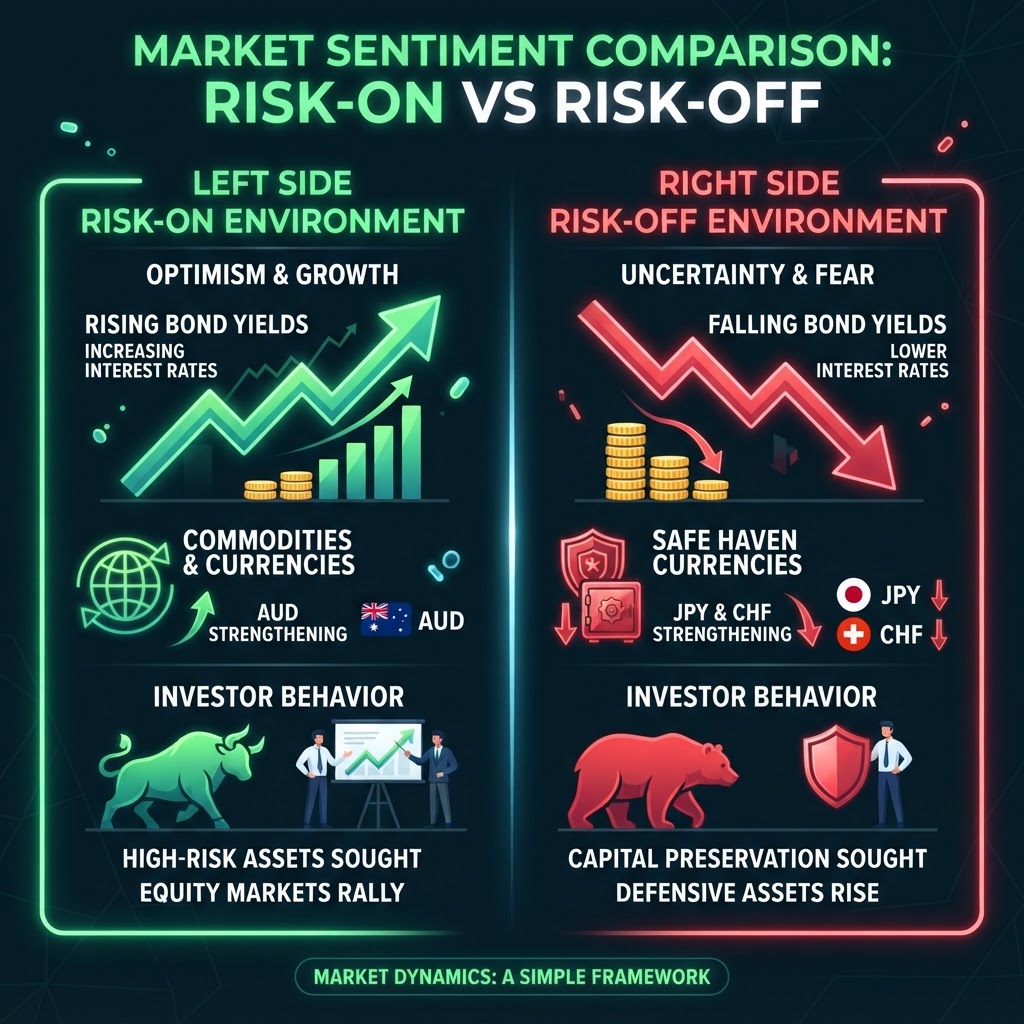
In risk-on periods, high-yield currencies such as AUD and NZD often strengthen. In risk-off periods, the JPY and CHF tend to gain even if their yields are low.
Practical Tips
Add the 2-year and 10-year yields of both currencies to your watchlist. Short-term yields react fastest to central bank expectations.
Educational content only. Trading forex involves significant risk and is not suitable for every investor.