Technical Analysis4 min readOctober 14, 2026
Harmonic Patterns: Trading Gartley, Bat, Butterfly and Crab Setups
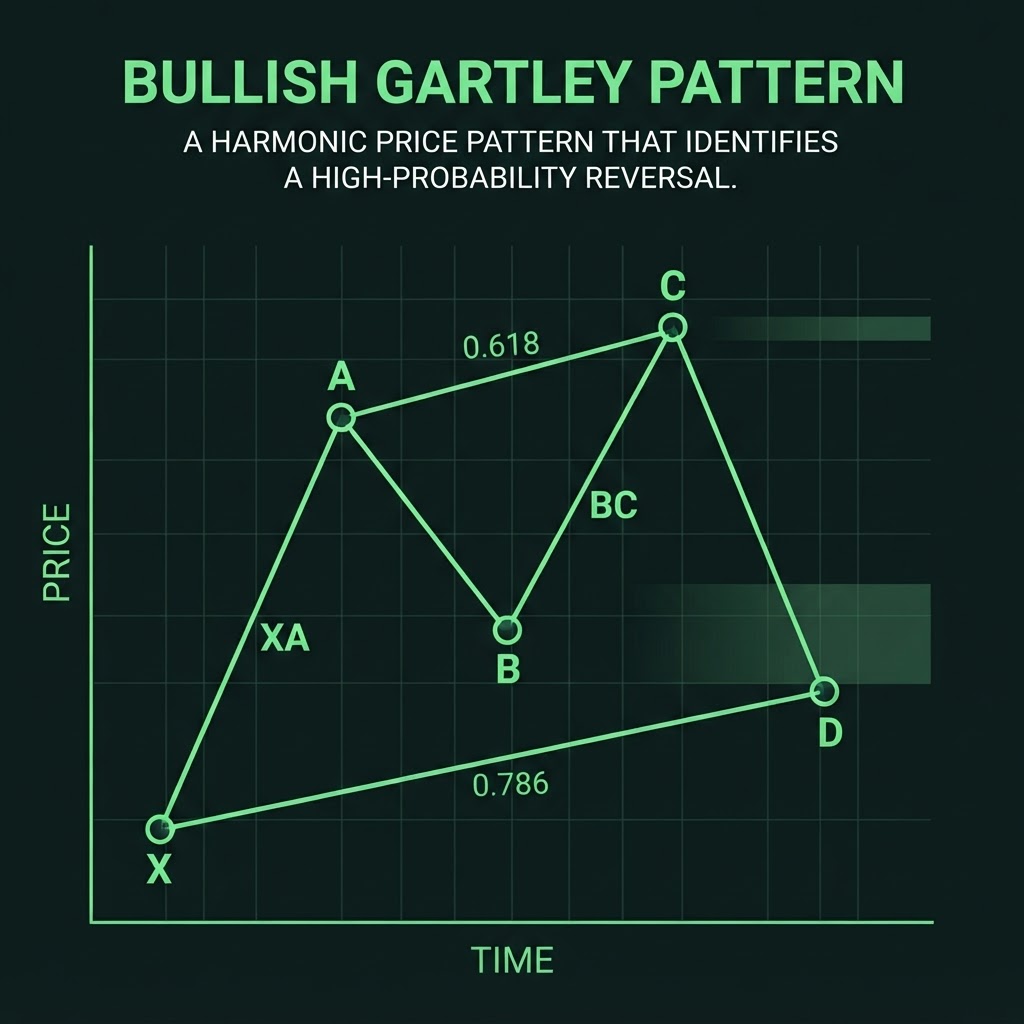
Harmonic patterns use Fibonacci ratios to define precise reversal zones. This guide explains the XABCD structure, the four main patterns, and how to manage harmonic trades.
Harmonic Patterns: Trading Gartley, Bat, Butterfly and Crab Setups
The XABCD Structure
Harmonic patterns are five-point structures labelled X, A, B, C and D. Each leg must meet specific Fibonacci ratios. When they align, point D becomes a high-probability reversal area.
The Gartley Pattern
The Gartley is the classic harmonic setup:
- B retraces 61.8% of XA
- C retraces 38.2% to 88.6% of AB
- D completes at 78.6% of XA
The bullish version looks like an "M"; the bearish version looks like a "W".
Bat, Butterfly and Crab
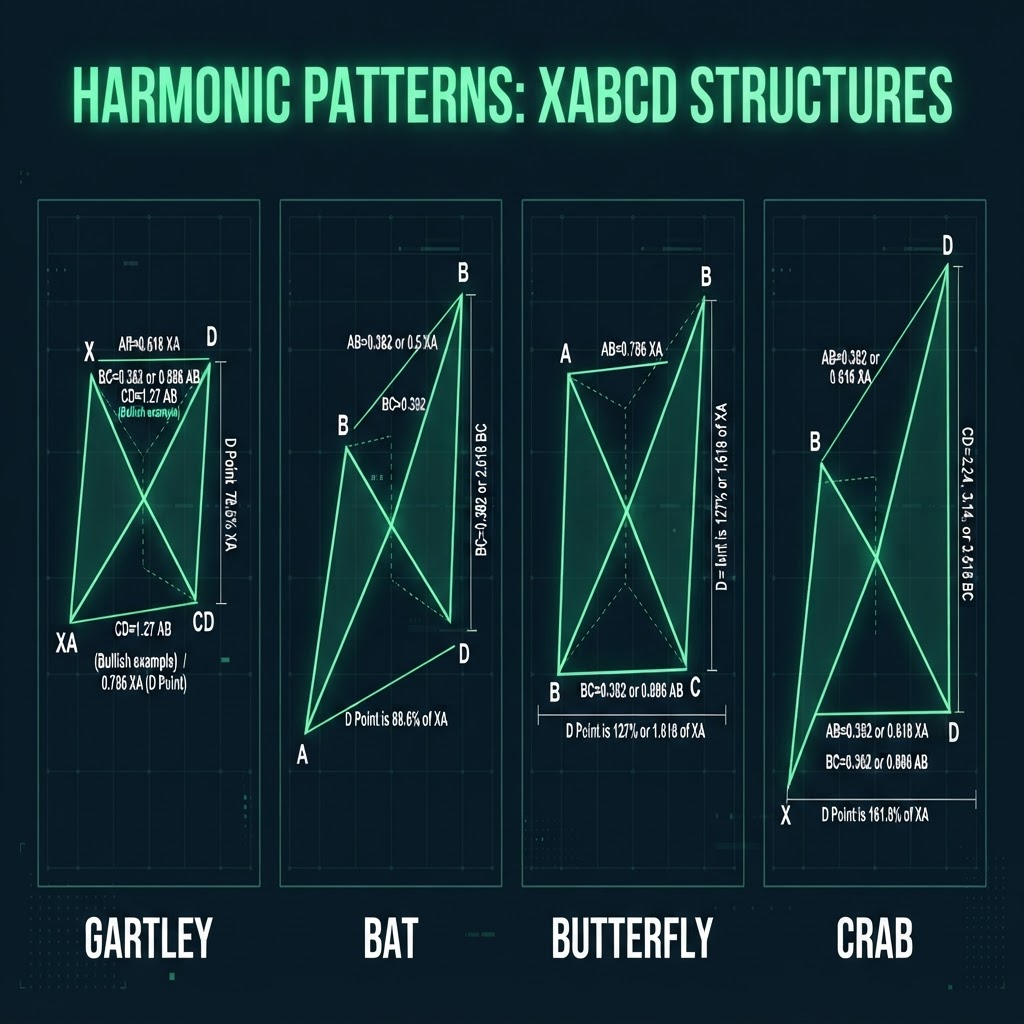
- Bat: D at 88.6% of XA, with a shallower B.
- Butterfly: D extends beyond X, at 127% of XA.
- Crab: the most extreme, with D at 161.8% of XA.
The Potential Reversal Zone
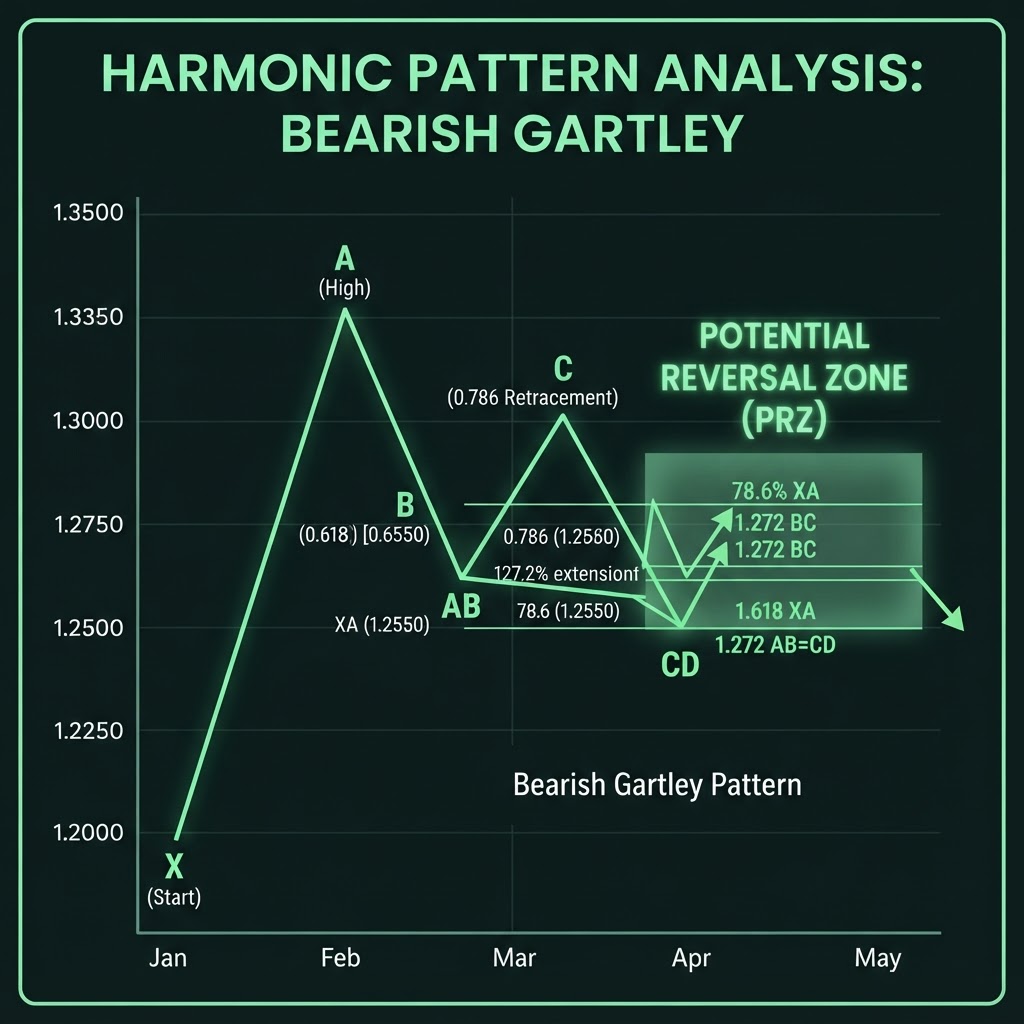
The PRZ is where several Fibonacci measurements cluster around D. Treat it as a zone, not an exact price, and wait for a reaction such as a rejection candle before entering.
Managing the Trade
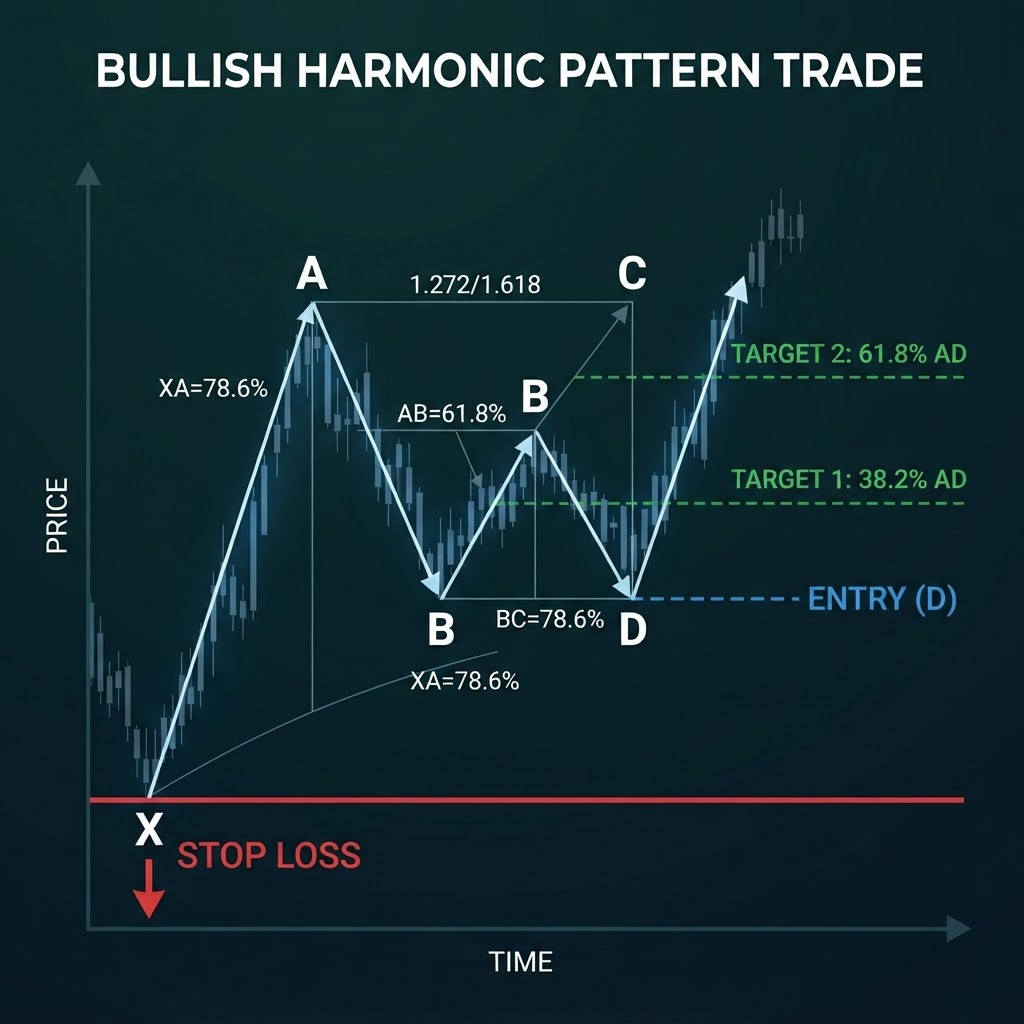
- Entry: inside the PRZ after confirmation
- Stop: beyond X or the end of the PRZ
- Target 1: 38.2% of AD
- Target 2: 61.8% of AD
Harmonics work best in ranging or mature trending markets and should be filtered with higher-timeframe structure.
Educational content only. Trading forex involves significant risk and is not suitable for every investor.