RSI and MACD Divergence: Spotting Momentum Shifts Before Price Turns
RSI and MACD Divergence: Spotting Momentum Shifts Before Price Turns
What Is Divergence?
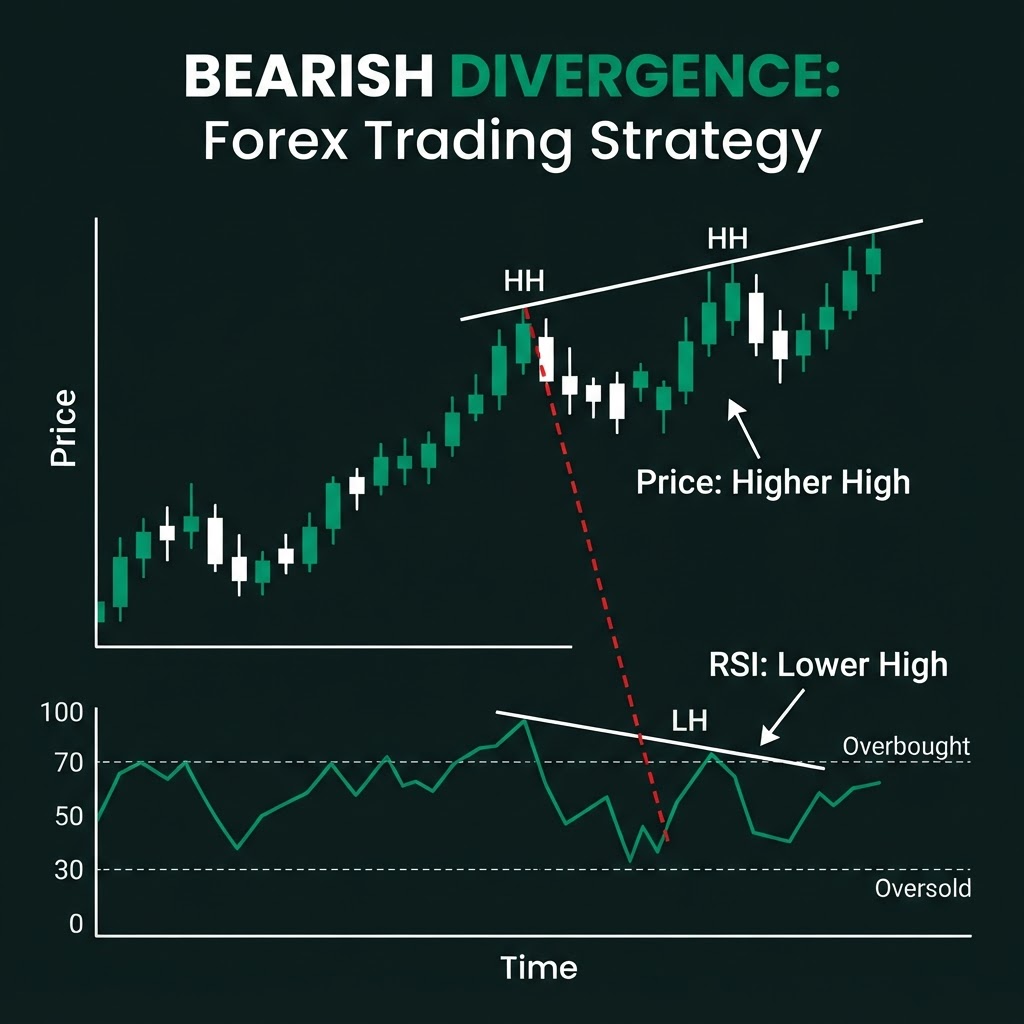
Divergence occurs when price and a momentum oscillator such as the RSI or MACD disagree. If price prints a new high but momentum does not, the push behind the move is weakening. Divergence is a warning, not an entry signal on its own.
Bearish Divergence
Bearish divergence appears when price makes a higher high while the oscillator makes a lower high. Buyers are still lifting price, but with less force each time. It is most meaningful at major resistance or after an extended rally.
Bullish Divergence
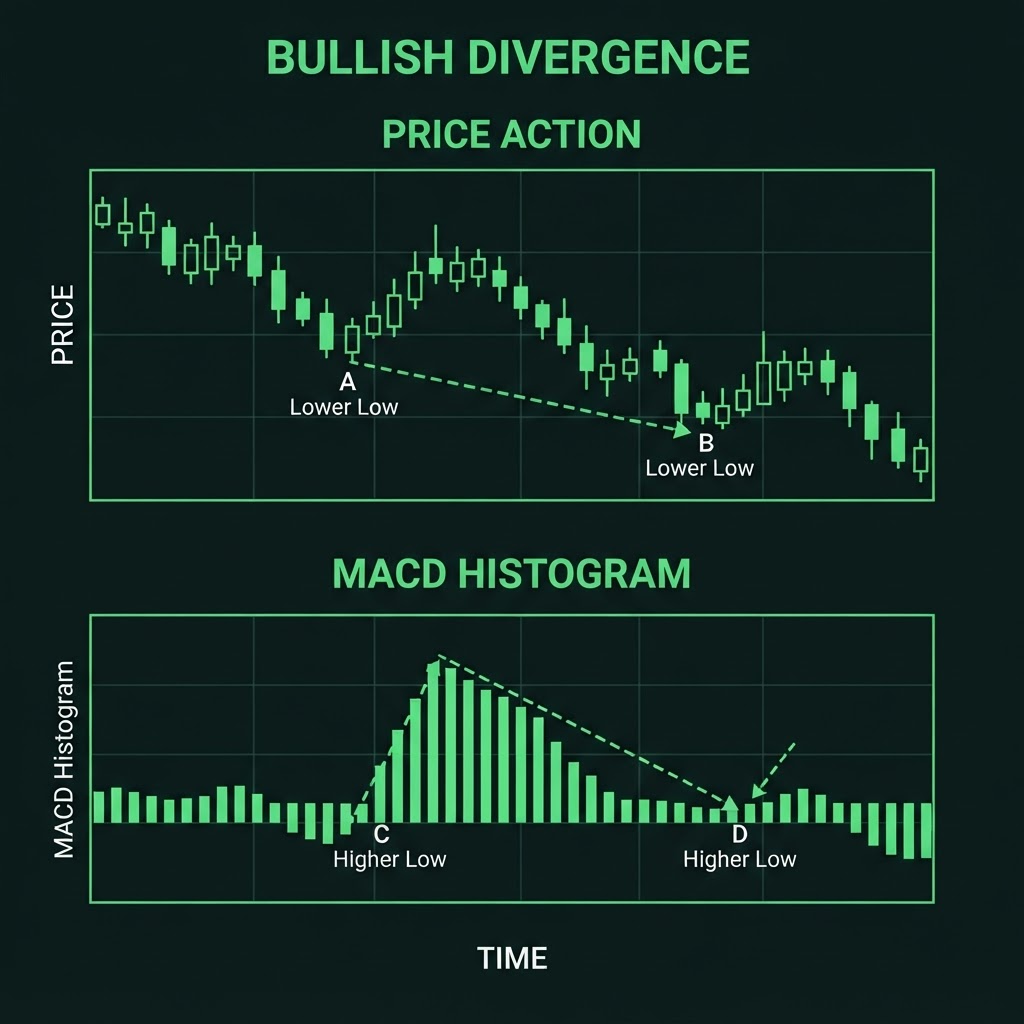
Bullish divergence forms when price makes a lower low while the oscillator makes a higher low. Sellers are losing momentum. On the MACD, watch the histogram: shrinking bars under zero at a new price low are a classic early clue.
Regular vs Hidden Divergence
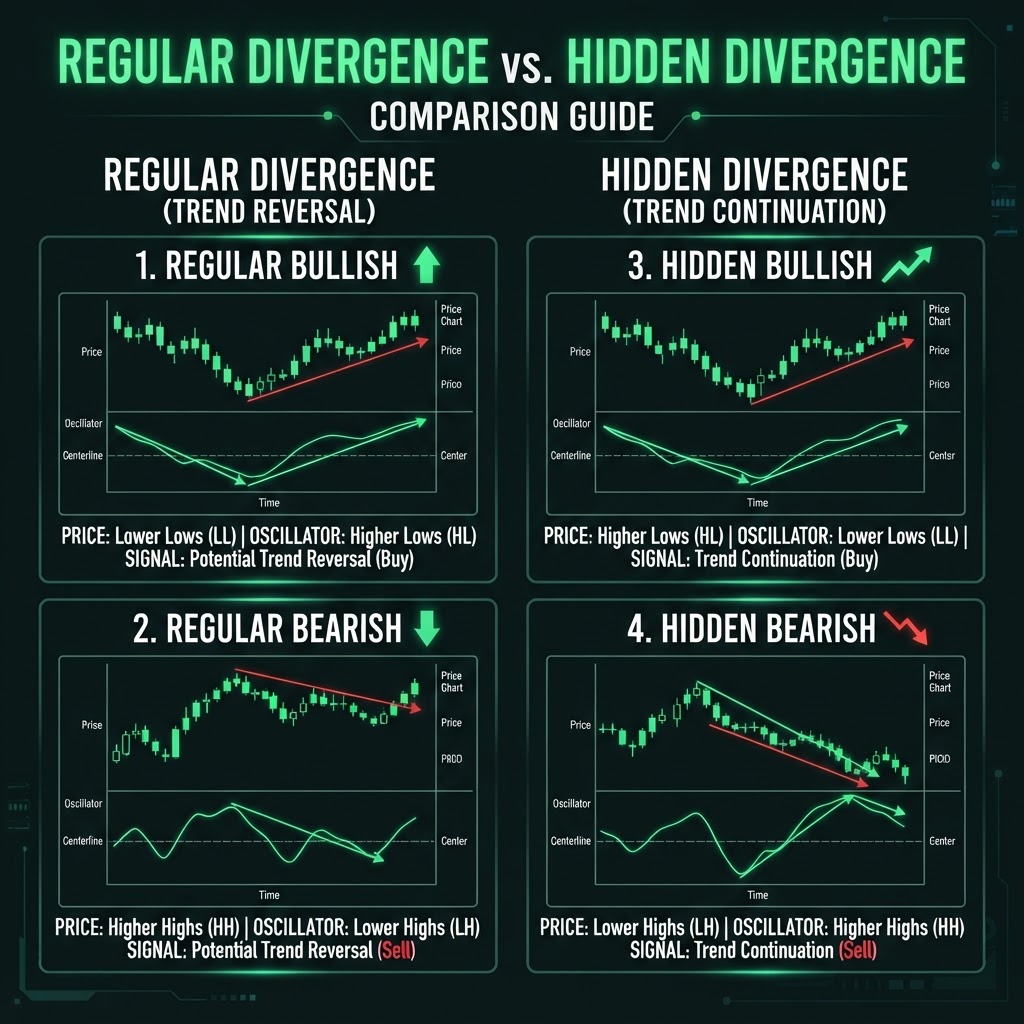
- Regular divergence suggests a possible reversal.
- Hidden divergence suggests trend continuation: in an uptrend, price makes a higher low while the oscillator makes a lower low.
Hidden divergence is often more reliable because it trades with the dominant trend.
Turning Divergence Into a Trade
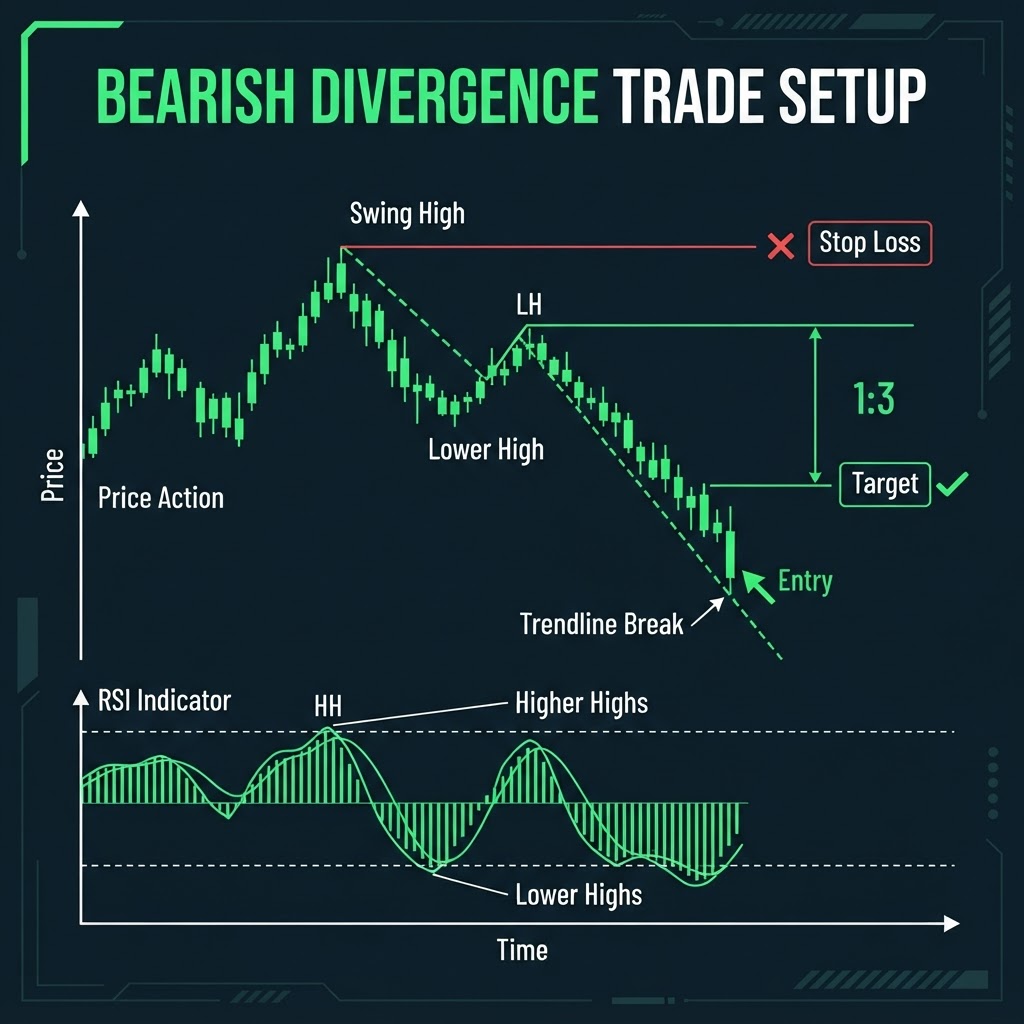
- 1Identify divergence at a key level.
- 2Wait for confirmation, such as a trendline break or a market-structure shift.
- 3Place the stop beyond the swing extreme.
- 4Target the nearest opposing level and require at least 1:2 reward-to-risk.
Common Mistakes
Divergence can persist for a long time in strong trends. Never short a market only because RSI diverges. Combine it with structure, levels, and higher-timeframe context.
Educational content only. Trading forex involves significant risk and is not suitable for every investor.