Cognitive Biases in Trading: Five Mental Traps and How to Control Them

Cognitive Biases in Trading: Five Mental Traps and How to Control Them
Why Smart Traders Still Make Irrational Decisions
Cognitive biases are mental shortcuts that help people process information quickly. In uncertain markets, those shortcuts can distort evidence, risk perception, and memory. Knowledge alone does not remove bias; traders need processes that make biased behavior harder to execute.
1. Confirmation Bias
Confirmation bias is the tendency to seek information that supports an existing view while ignoring evidence against it. A trader holding a long position may notice every bullish comment and dismiss a bearish structure break.
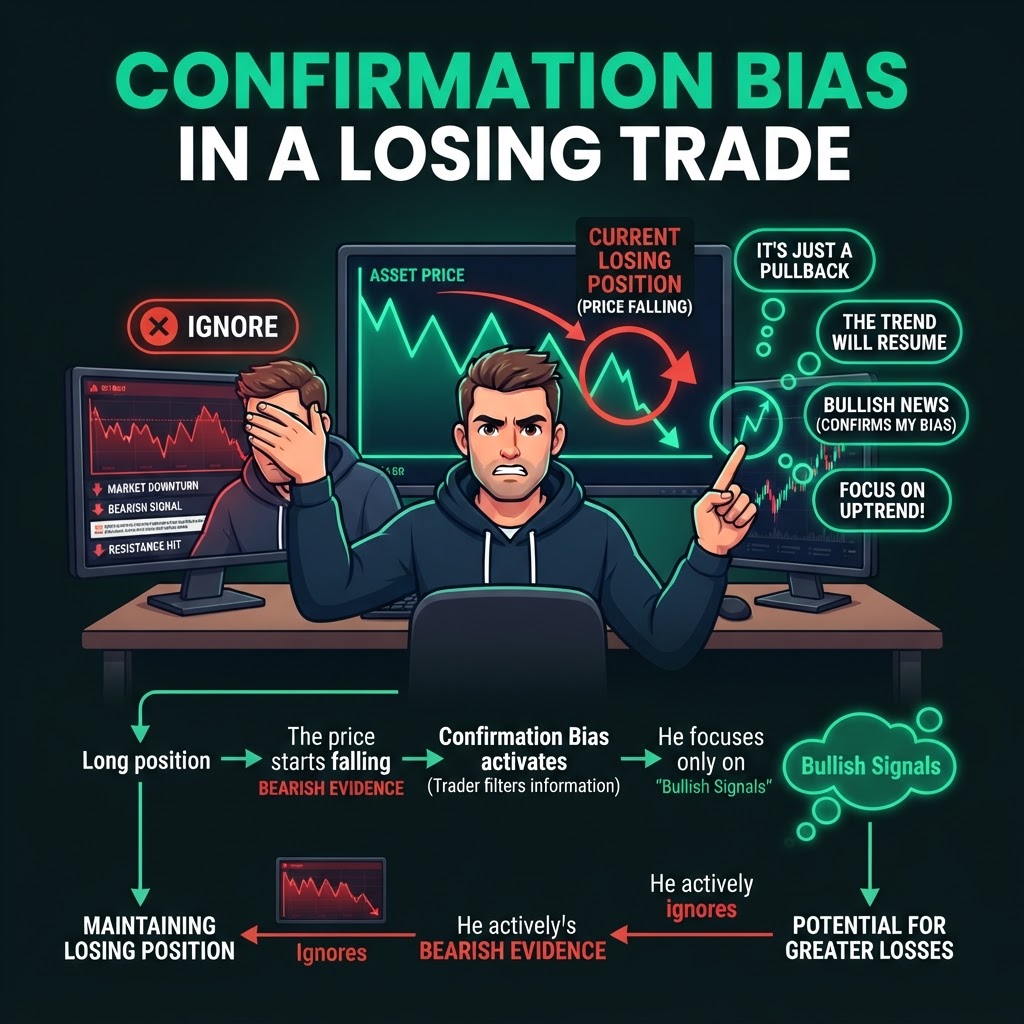
Counter it by writing the invalidation before entry and asking: What observable evidence would prove this idea wrong? Deliberately record at least one opposing argument.
2. Recency Bias
Recency bias gives excessive weight to recent outcomes. After several wins, a trader may assume the strategy has become safer and increase size. After several losses, the same trader may abandon a valid system just before normal performance returns.
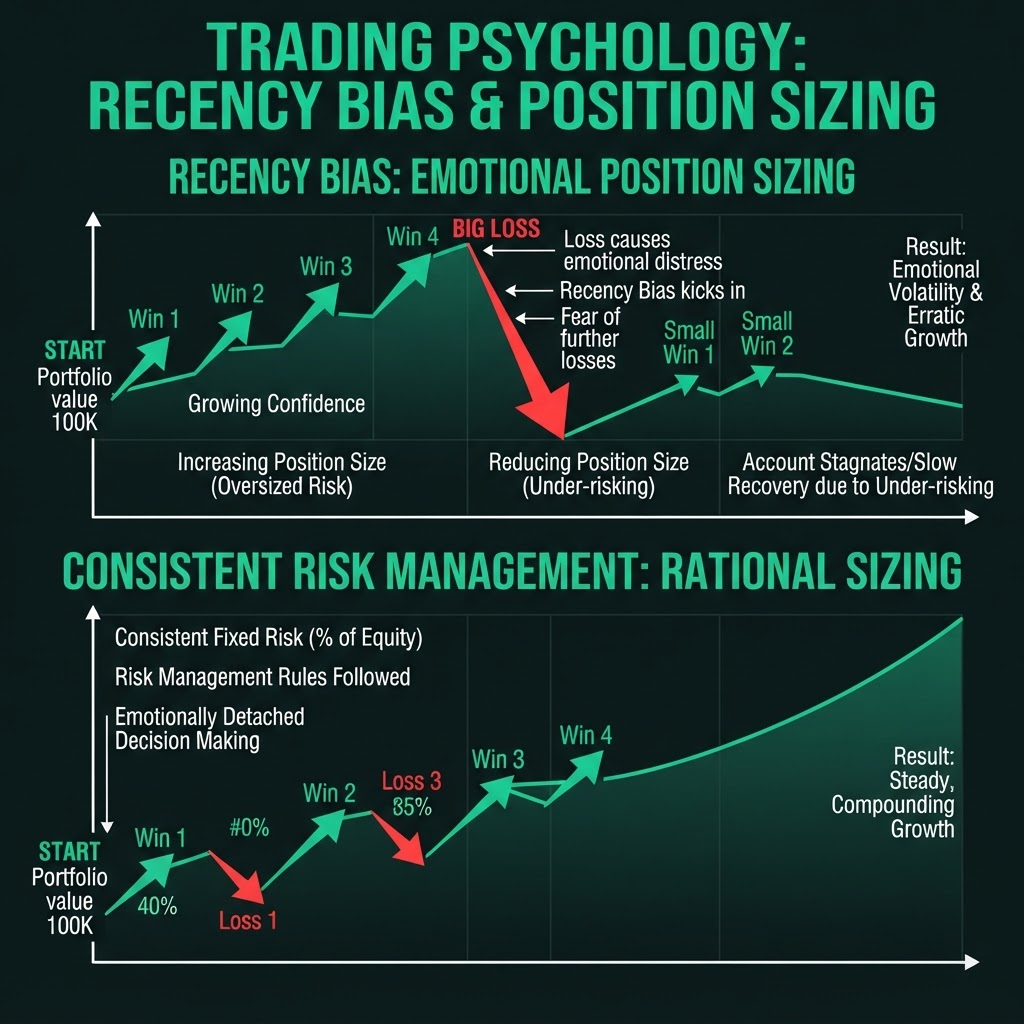
Use a fixed risk model and evaluate performance over a statistically meaningful rolling sample. A short streak should not rewrite the plan.
3. Loss Aversion
People often feel the pain of a loss more intensely than the satisfaction of an equal gain. In trading, this can lead to closing winners too early while allowing losers more room in the hope of avoiding a realized loss.
Define exits before entry and automate them where appropriate. Judge the quality of the decision, not whether one trade won.
4. Anchoring
Anchoring occurs when decisions remain attached to an initial reference point. A trader may insist that a currency must return to an old entry price or to a forecast made before new economic data arrived.
Reassess the trade using current information. The market does not know the trader's entry and has no obligation to return to it.
5. Overconfidence
A winning period can make skill appear more certain than it is. Overconfidence produces oversized positions, excessive frequency, and a reduced willingness to use stops. Separate process skill from outcome luck by reviewing a large sample and tracking rule violations.
A Debiasing Checklist
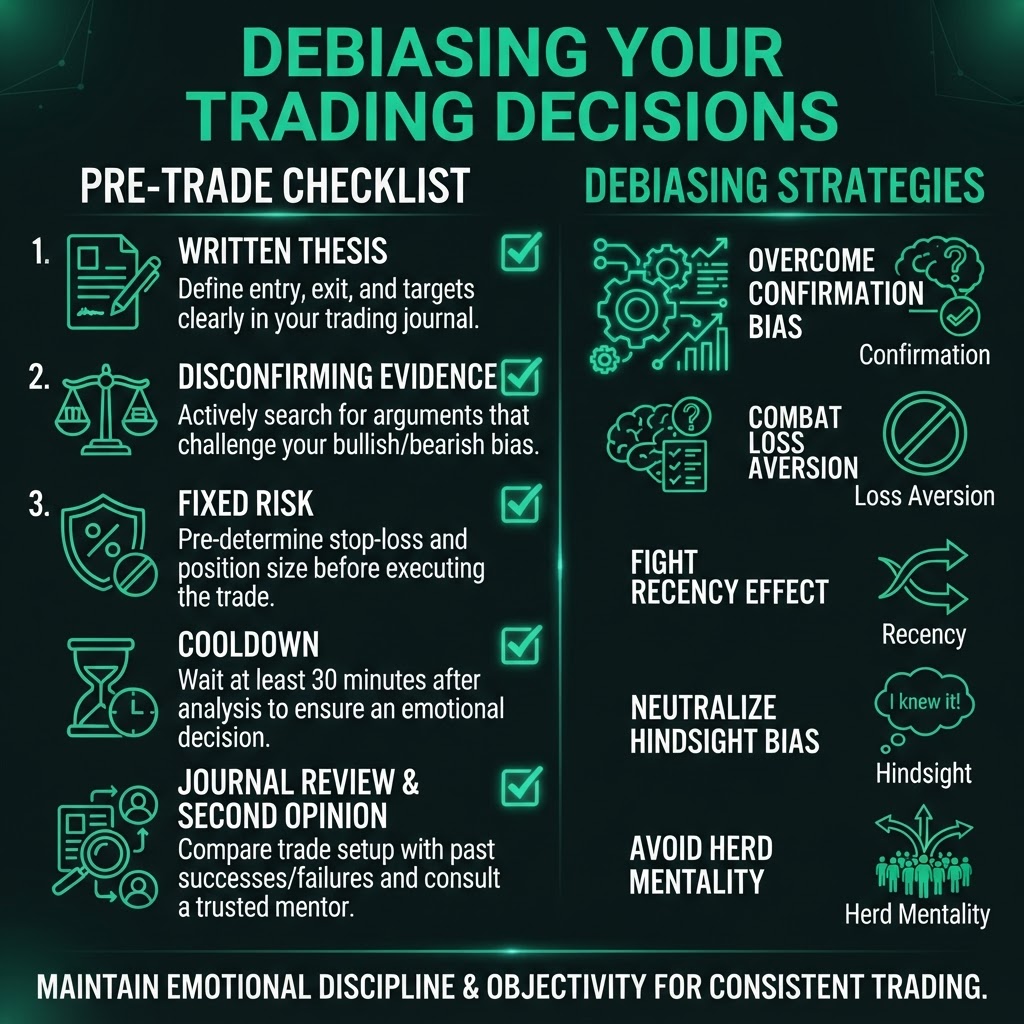
Before each trade:
- 1Write the thesis and invalidation.
- 2List evidence both for and against the position.
- 3Calculate size from the predetermined risk limit.
- 4Check whether recent results are influencing the decision.
- 5Confirm that the entry was planned rather than chased.
- 6Take a cooldown after a large win or loss.
After the trade, review whether the rules were followed. A losing trade executed correctly can be good work; a profitable rule violation can be dangerous behavior.
Design the Environment
Reduce exposure to noisy commentary, use alerts instead of constant chart watching, and keep size small enough that normal losses remain emotionally manageable. A checklist, journal, and mandatory pause create useful friction between impulse and action.
Final Takeaway
Bias cannot be eliminated, but its influence can be reduced. Objective rules, consistent sizing, written disconfirmation, and process-based review help traders make decisions from evidence rather than from the emotional story of the moment.