Trading Confluence: Building a Rule-Based Setup Scorecard
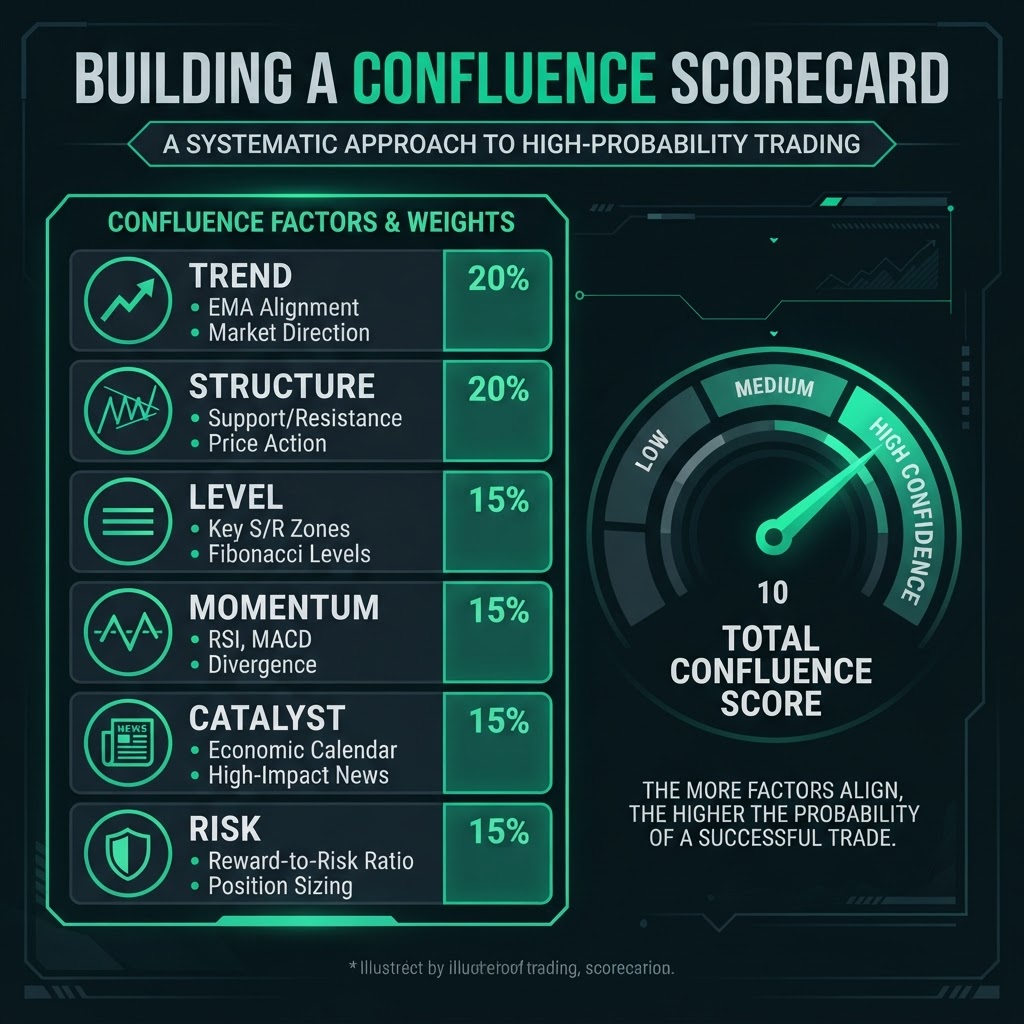
Trading Confluence: Building a Rule-Based Setup Scorecard
What Confluence Really Means
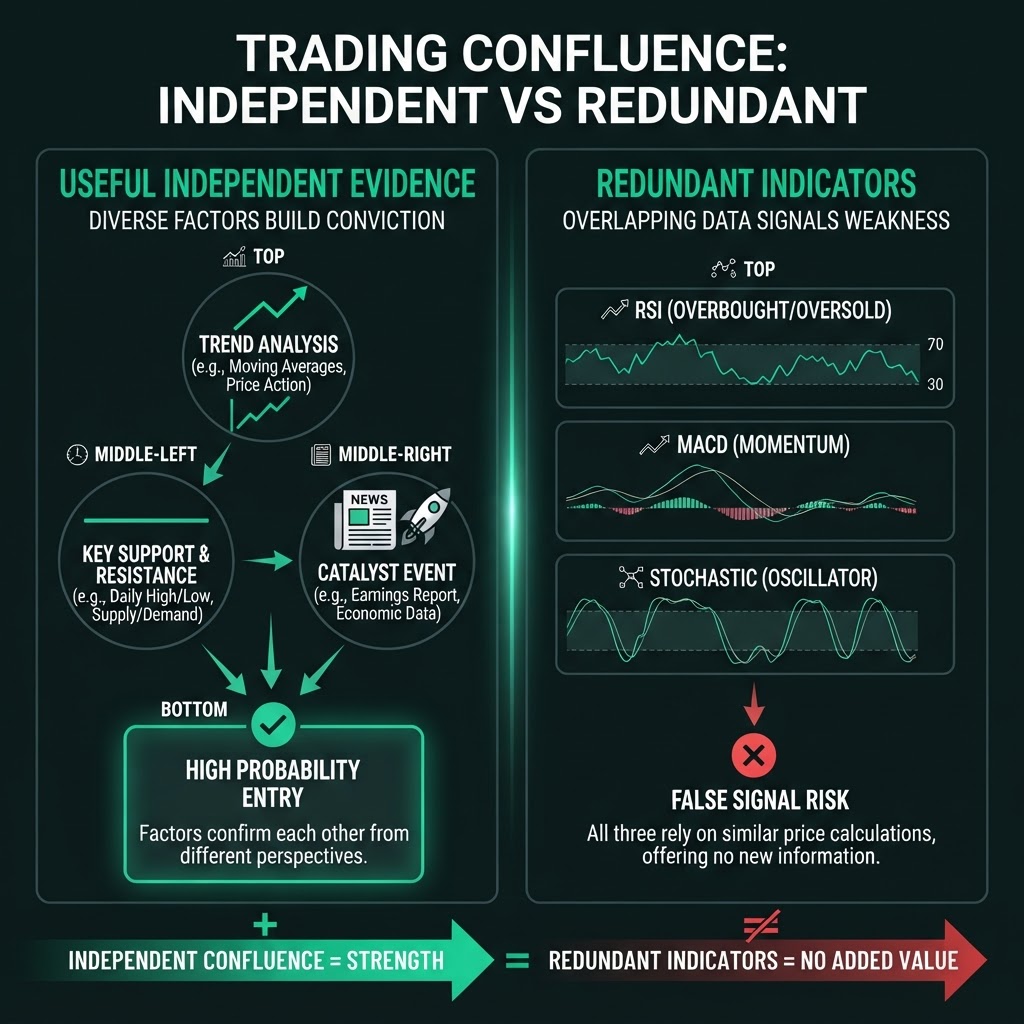
Confluence is the alignment of several relevant pieces of evidence around one trading idea. It should improve decision quality by combining different dimensions of the market, not by collecting many indicators that measure the same thing.
A scorecard converts this idea into a repeatable process. Each setup is evaluated against predefined factors before an entry is allowed.
Choose Independent Factors
Useful categories may include higher-timeframe trend, market structure, location, momentum, fundamental catalyst, session liquidity, and reward-to-risk potential. The exact factors should reflect the strategy's tested logic.
Three momentum oscillators are not three independent confirmations. RSI, stochastic, and MACD often respond to similar price information. Counting each separately creates false confidence.
Build the Score
Assign a clear weight to each factor. For example:
- Higher-timeframe direction: 2 points.
- Structure confirmation: 2 points.
- Entry at a preplanned level: 2 points.
- Momentum or displacement: 1 point.
- Fundamental or session catalyst: 1 point.
- Minimum reward-to-risk available: 2 points.
A score of seven may qualify for normal risk, five or six for reduced risk, and anything lower for no trade. Thresholds must be validated rather than selected to justify existing habits.
Example Setup
Assume GBP/USD is in a daily uptrend and returns to four-hour support. During London trading, price sweeps a prior low, closes back above the level, and breaks lower-timeframe bearish structure. The next major high offers more than twice the stop distance.
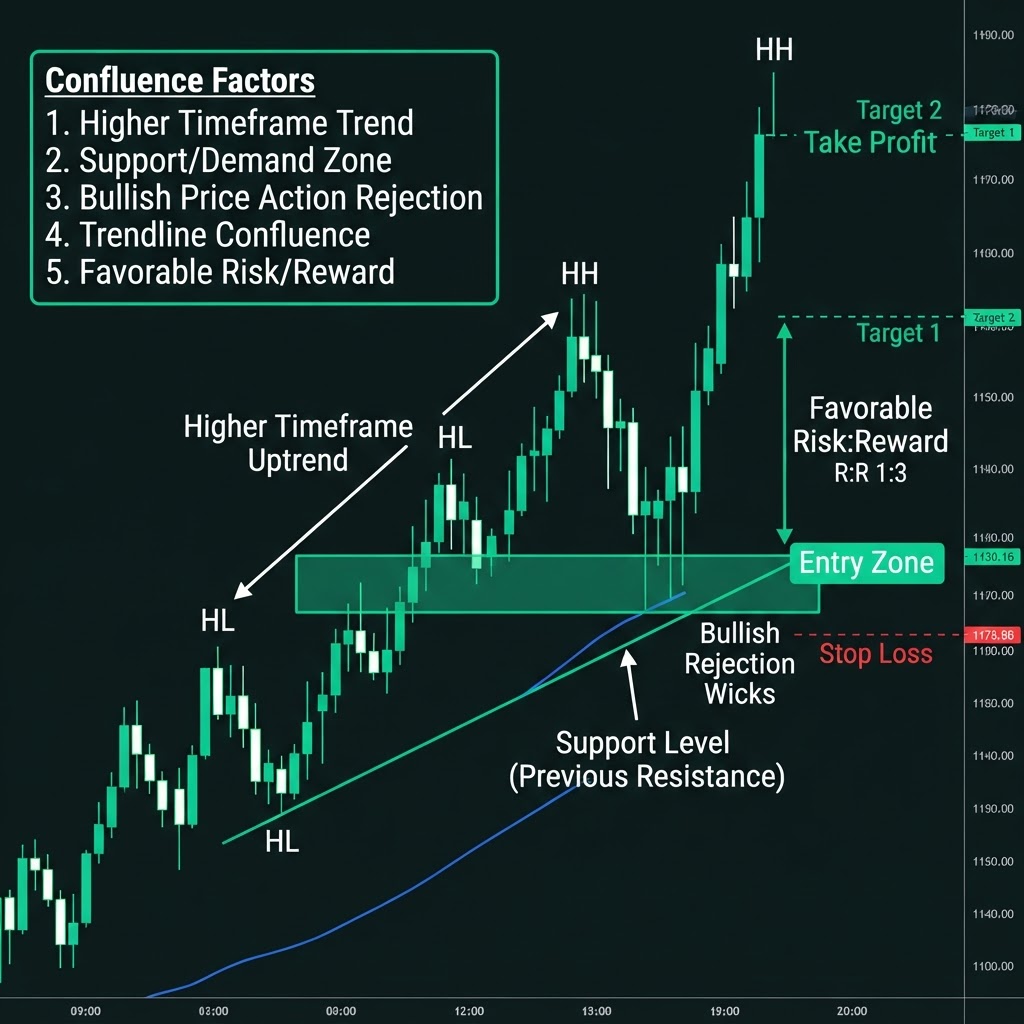
This setup combines direction, location, liquidity behavior, timing, confirmation, and favorable payoff. Each factor has a different role, making the evidence more valuable than a stack of correlated indicators.
Add Non-Negotiable Gates
Some conditions should not be offset by extra points. If the position violates maximum risk, occurs immediately before an unplanned major announcement, or lacks enough reward to the target, the trade should fail regardless of its score.
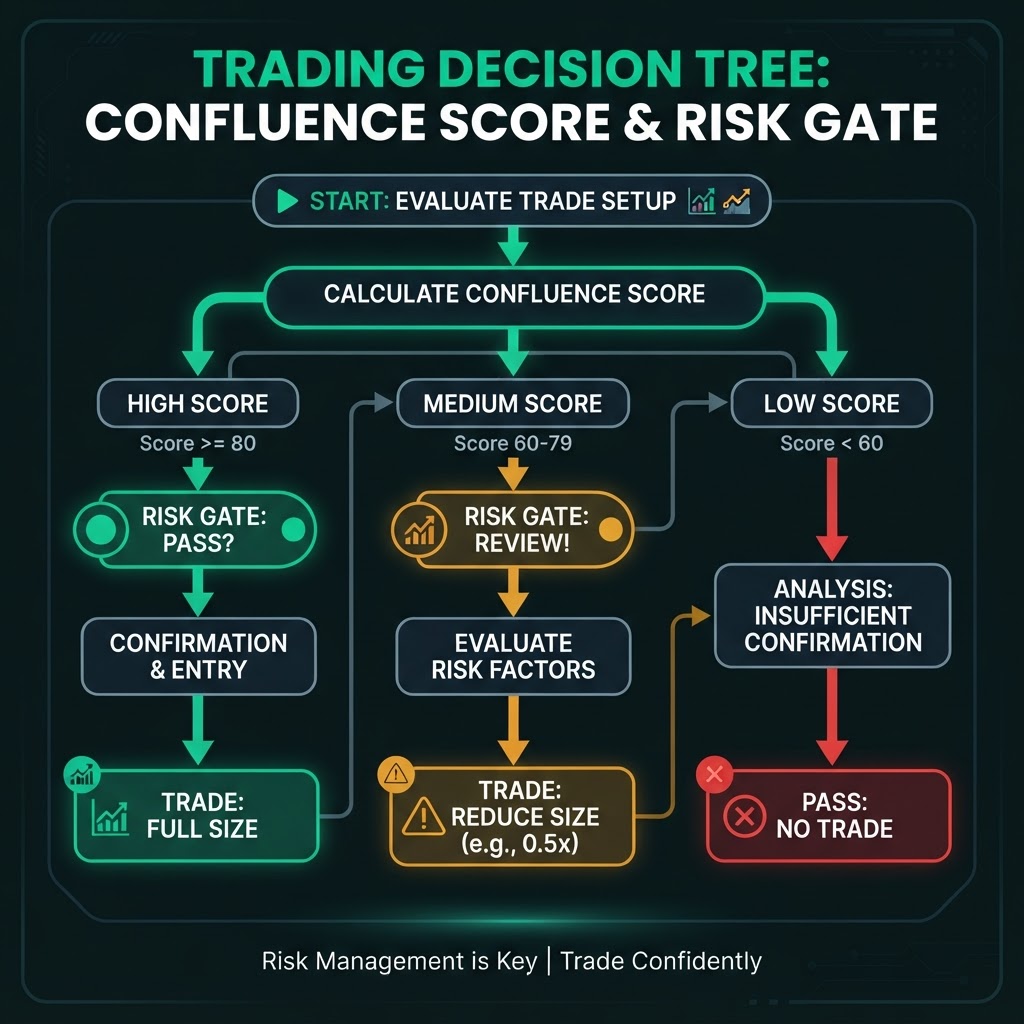
A decision tree can make the process explicit:
- 1Does the trade pass every risk gate?
- 2Is the score above the full-risk threshold?
- 3If not, is it above the reduced-risk threshold?
- 4If neither condition is met, pass.
Prevent Score Manipulation
Complete the scorecard before entering. Do not reinterpret a criterion because a trade feels exciting. Add screenshots and the final score to the journal. After a meaningful sample, compare performance by score band to see whether higher scores actually produce better outcomes.
Final Takeaway
A confluence scorecard does not eliminate uncertainty. It creates consistency. Use independent evidence, objective scoring, non-negotiable risk gates, and regular review to make setup selection less emotional and more testable.