Trading High-Impact News: Volatility, Slippage, and Execution Risk
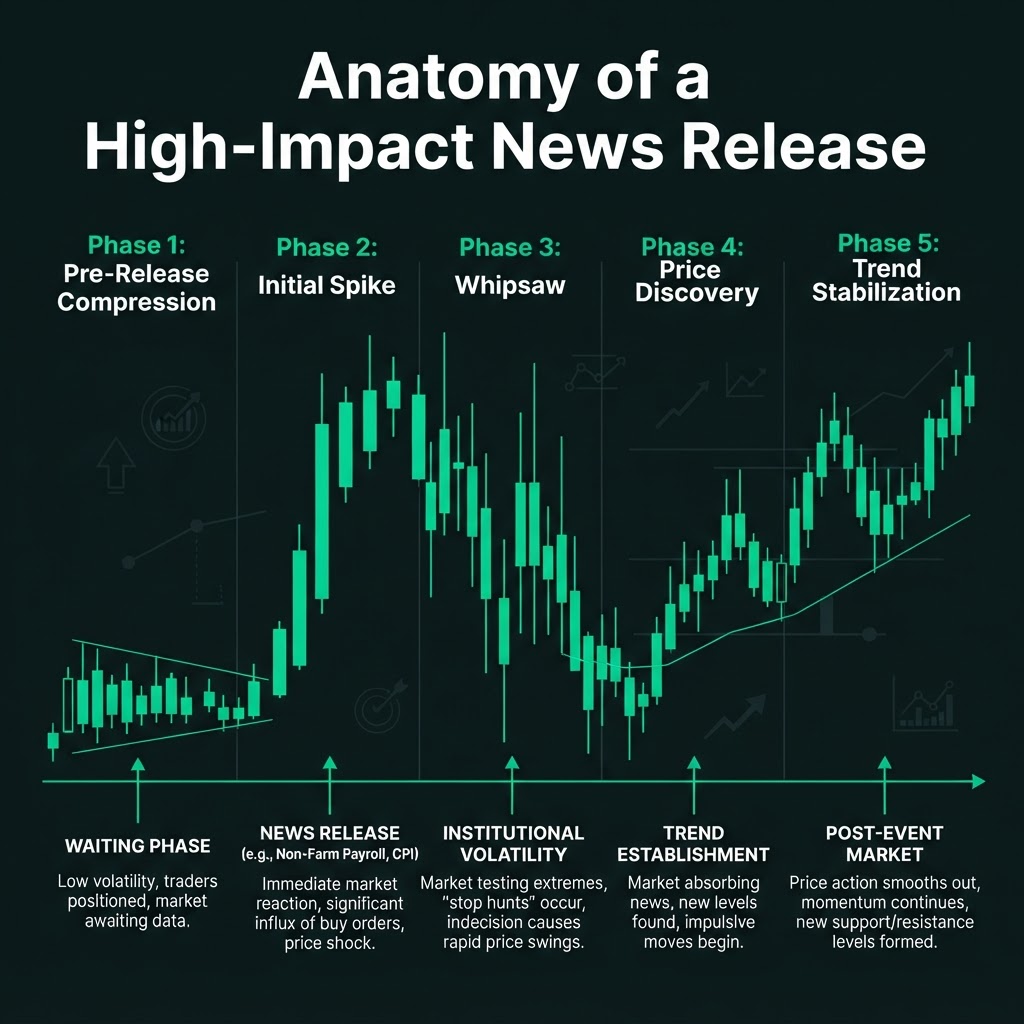
Trading High-Impact News: Volatility, Slippage, and Execution Risk
Why News Trading Is Different
Major releases such as inflation, employment, GDP, and central-bank decisions can reprice currencies in seconds. The market is not merely moving faster; the available liquidity, spread, and probability of receiving the requested price can all change simultaneously.
Before the release, price may compress as participants reduce exposure. The first move reflects automated interpretation of the headline. A reversal can follow when traders process revisions and details. Only later may a more stable directional move emerge.
Spread and Slippage
The spread is the difference between bid and ask. Around uncertain events, liquidity providers protect themselves by widening quotes. Slippage occurs when an order is filled at a different price from the one requested. Stop orders become market orders when triggered, so they can receive a materially worse fill in a fast market.
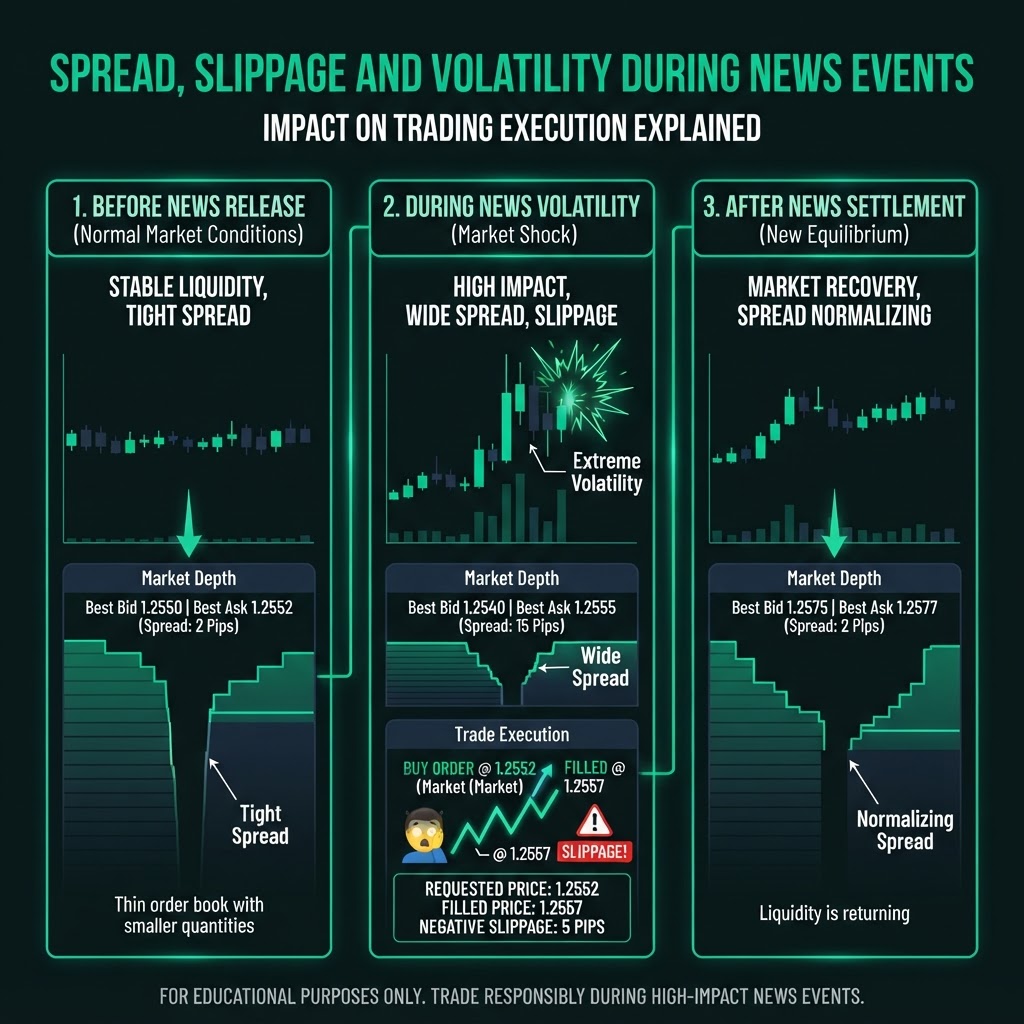
A five-pip stop does not guarantee a five-pip loss if the next tradable price is much farther away. Position sizing must reflect this execution uncertainty.
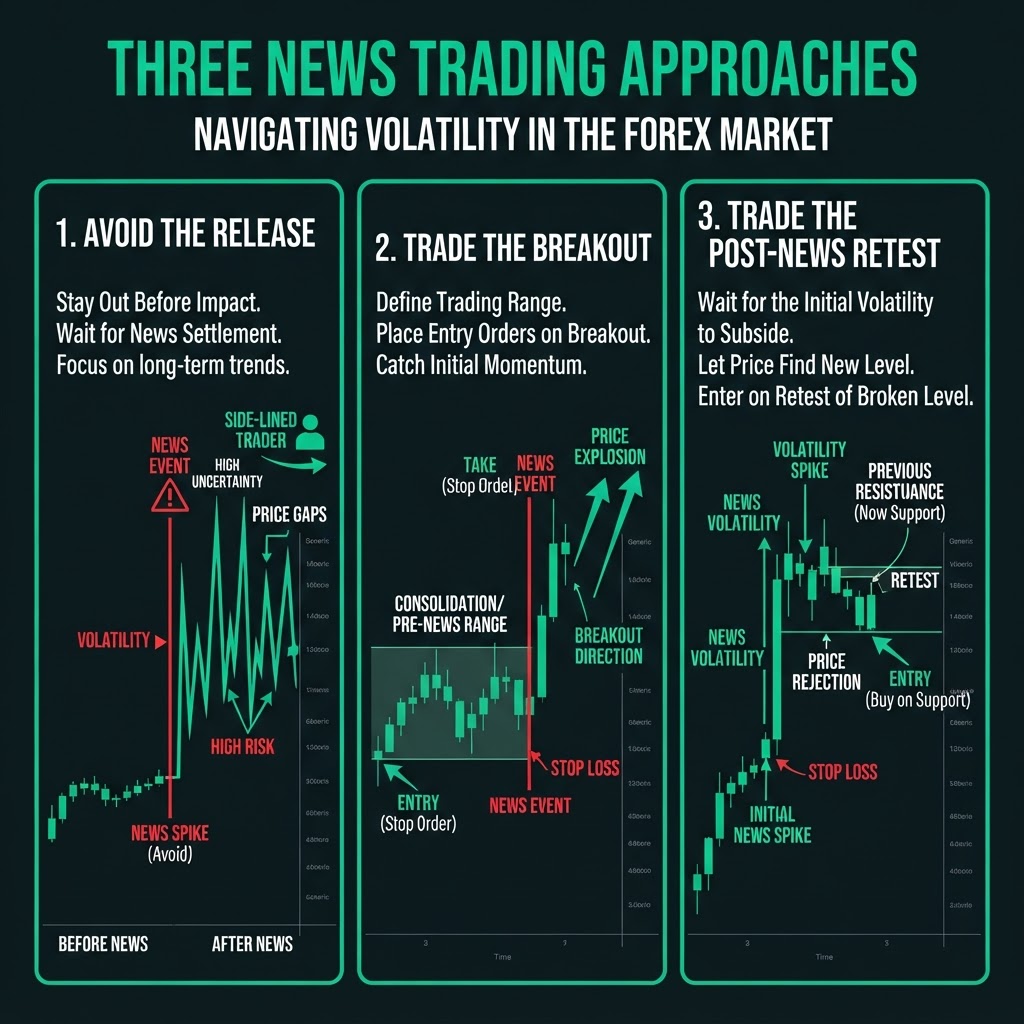
Three Practical Approaches
The first approach is to avoid the release entirely. Close short-term positions or wait until conditions normalize. This is often the best choice for traders whose strategy was not designed and tested for news.
The second approach is trading a breakout. It offers early participation but faces maximum spread, slippage, and false-break risk.
The third approach is waiting for a post-news retest. The entry is later, but the trader gains more information about direction and can often define risk more clearly.
Reading the Release
Markets react to the difference between actual data and expectations, not simply whether the number looks good or bad. Revisions, subcomponents, and the central bank's likely response matter. A strong headline can produce currency weakness if the market expected an even stronger result.
Safety Rules
Check an economic calendar before every session. Know the scheduled time and affected currencies. Reduce size because volatility expands, and avoid assuming a tight stop provides precise protection. Wait for the spread to normalize if using a retest strategy.
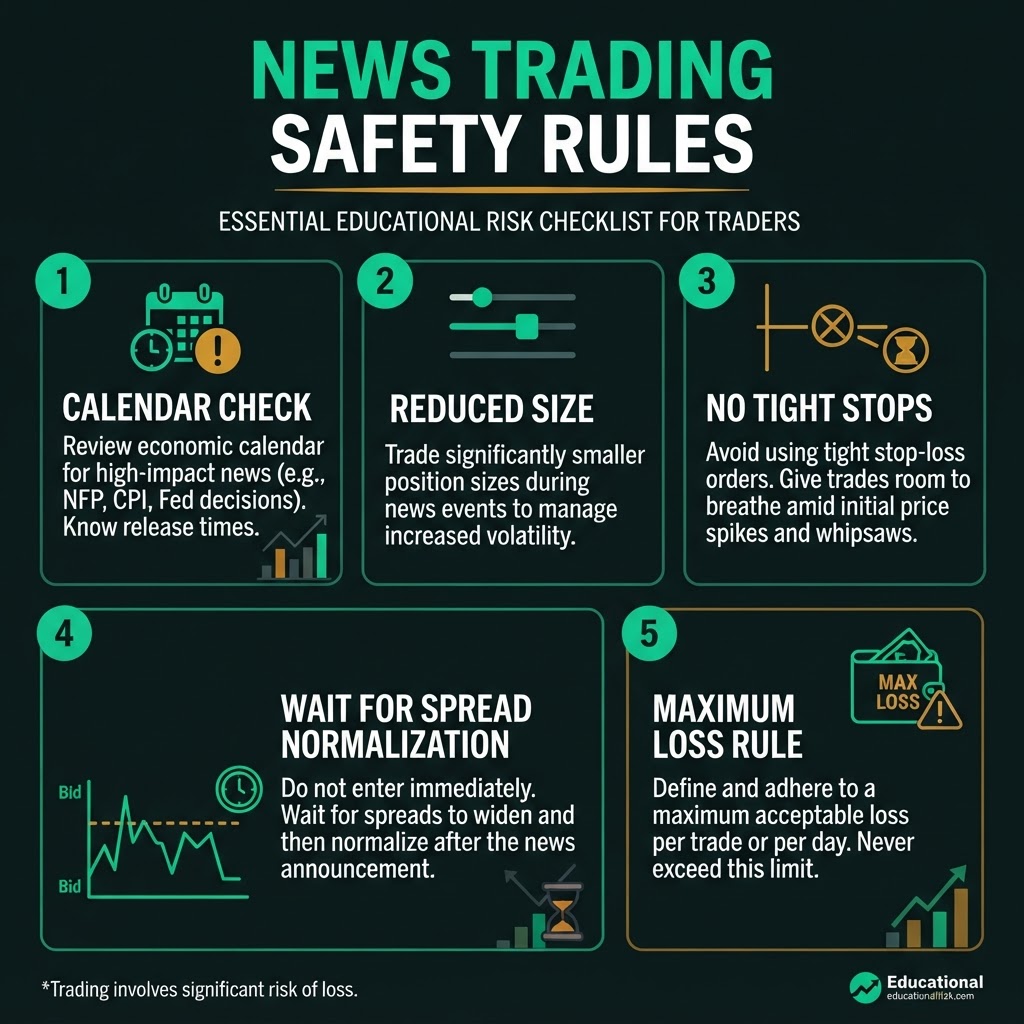
Other rules include:
- Define a maximum daily loss.
- Never remove a stop after adverse slippage.
- Avoid stacking correlated positions around one event.
- Record requested and actual fills in the journal.
- Test the strategy with realistic transaction costs.
Common Mistakes
Straddling the market with opposing stop orders can trigger both sides during a whipsaw. Chasing the first candle often creates a poor entry after the easiest part of the move. Increasing leverage because the opportunity looks certain turns normal forecast error into account-threatening risk.
Final Takeaway
News creates opportunity and execution risk at the same time. Traders who participate should use a tested approach, smaller exposure, realistic assumptions about fills, and a clear point at which they will stand aside.