Currency Carry Trades: Profiting from Interest-Rate Differentials
Currency Carry Trades: Profiting from Interest-Rate Differentials
The Core Idea
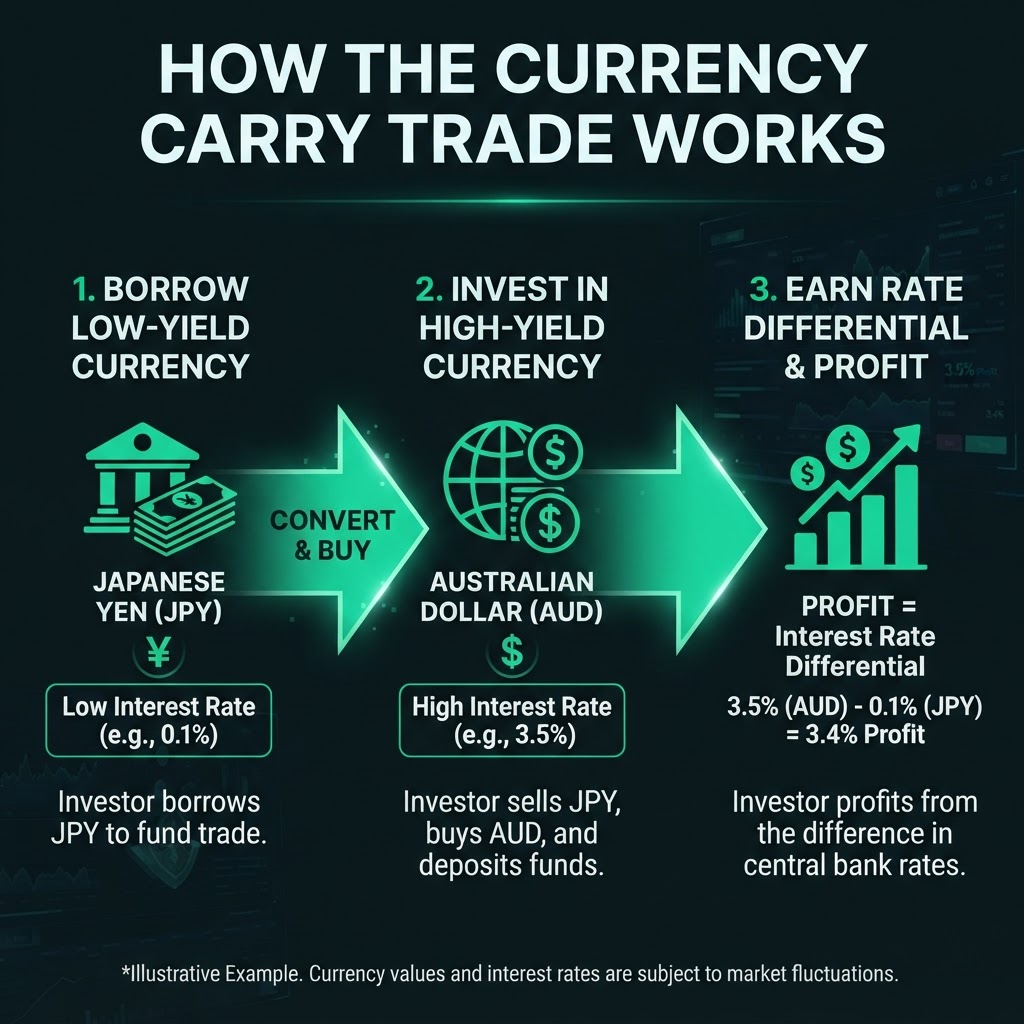
A currency carry trade seeks to benefit from the interest-rate difference between two currencies. The trader borrows or sells a lower-yielding currency and buys a higher-yielding currency. If the exchange rate remains stable, the position may earn positive overnight financing, commonly called swap or rollover.
Imagine Currency A has a policy rate of 1% and Currency B has a rate of 5%. Buying B against A creates a theoretical positive differential of four percentage points. The broker's actual swap will differ because of funding costs, markups, day-count conventions, and market expectations.
Positive and Negative Carry
Carry depends on both the pair and trade direction. A long position can earn interest while a short position in the same pair pays it. Always check the broker's current long and short swap rates before trading.
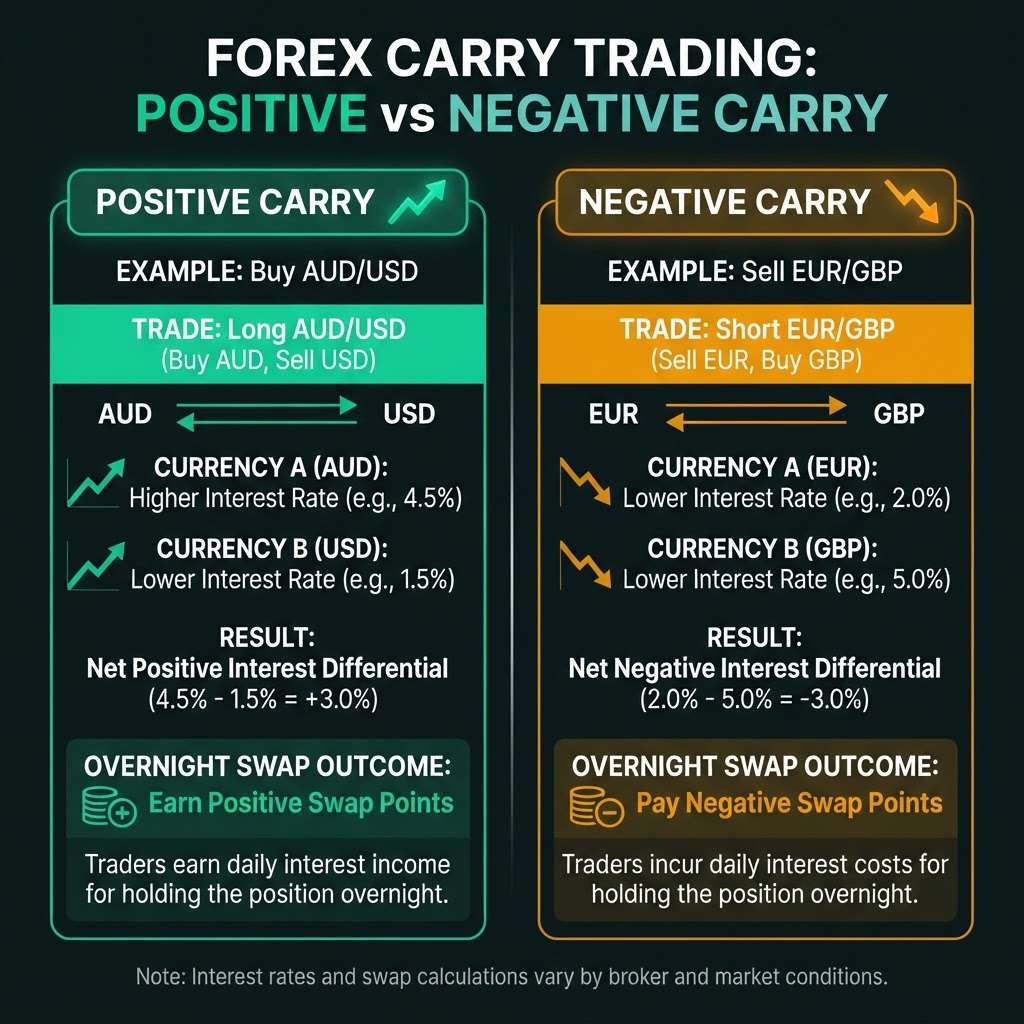
Rollover is typically applied at a daily cutoff. A larger adjustment on one weekday often accounts for weekend settlement. Holidays can also change the schedule. These operational details matter when a position is held for weeks or months.
Why Carry Trades Work
Higher interest rates can attract capital, supporting the high-yield currency. Carry strategies tend to perform best when volatility is moderate, the high-yield currency has a stable or rising trend, and investors are comfortable taking risk.
The total return has two parts:
- 1The change in the exchange rate.
- 2The accumulated financing result.
A favorable swap cannot rescue a position that moves sharply against the trader. Price risk usually dominates daily carry income.
The Risk-Off Unwind
Carry trades can become crowded. When volatility rises or markets fear a crisis, traders may rapidly reduce leveraged positions. They sell the higher-yield asset and repurchase the funding currency, producing a violent carry unwind.
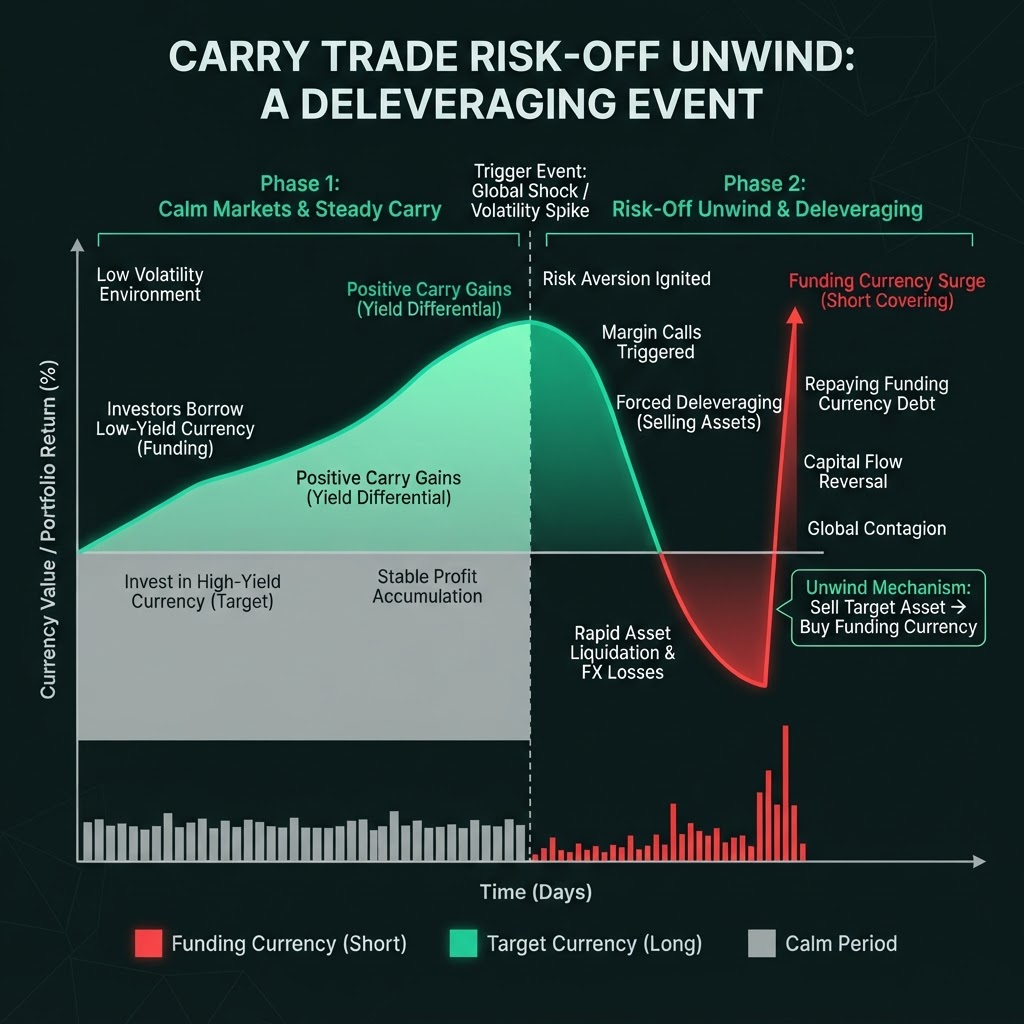
This asymmetric behavior is important: gains may accumulate slowly, while losses arrive quickly. A funding currency can strengthen even if its domestic interest rate remains low because global deleveraging creates urgent demand for it.
Evaluating a Carry Opportunity
Review more than the current policy rates. Markets price future central-bank decisions, so a large differential may already be expected or may soon narrow.
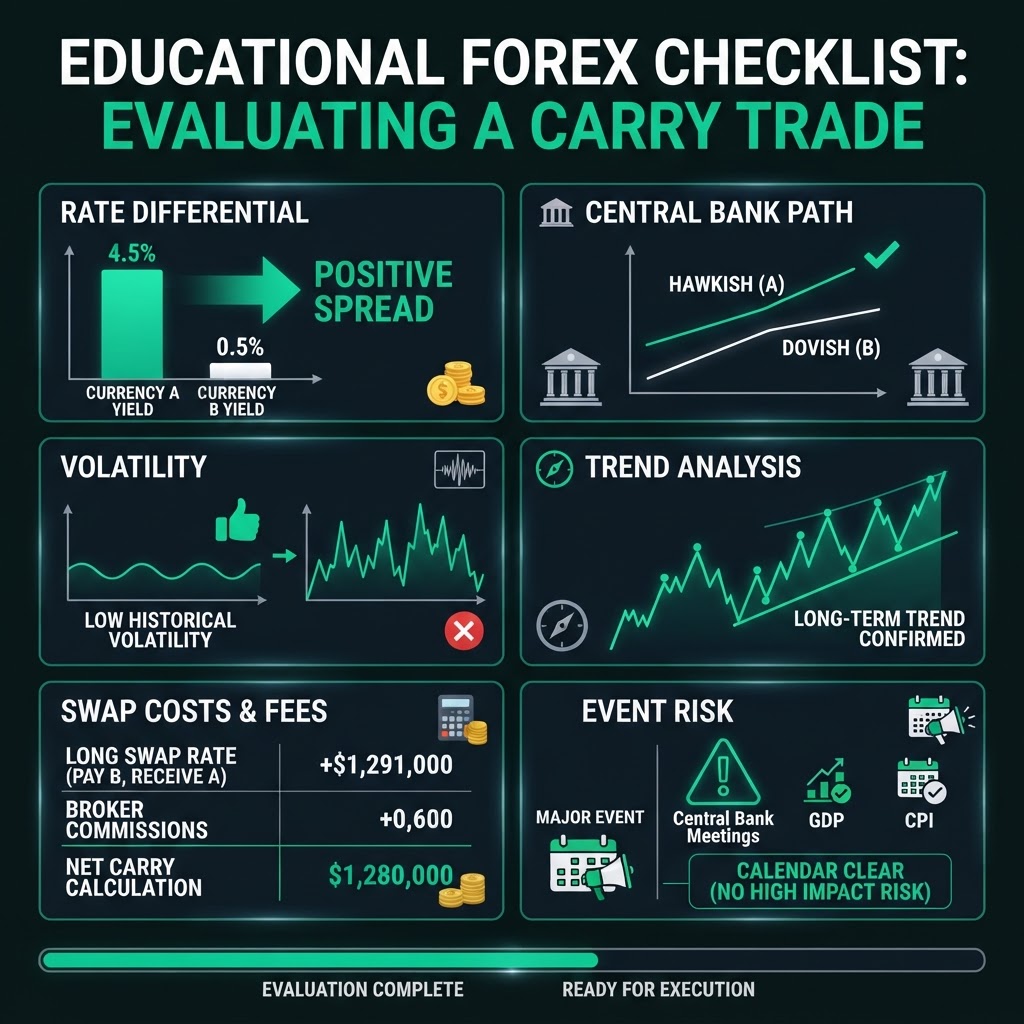
A sound review covers:
- Current and expected rate differentials.
- Inflation and central-bank guidance.
- Trend direction and major technical levels.
- Implied and realized volatility.
- Broker swap rates and execution costs.
- Political, commodity, and event risks.
Risk Controls
Use modest leverage, because carry trades are often held longer than intraday positions. Define a price-based invalidation rather than holding indefinitely for the swap. Reduce exposure before binary events when the outcome could change the rate path. Diversification across highly correlated carry pairs is not true diversification.
Final Takeaway
Carry is a return source, not free income. The strongest opportunities combine a durable rate advantage, supportive trend, contained volatility, and controlled leverage. Evaluate the likely future differential and the risk of an unwind before focusing on the attractive daily credit.