Fair Value Gaps in Forex: Finding and Trading Price Imbalances
Fair Value Gaps in Forex: Finding and Trading Price Imbalances
Understanding Imbalance
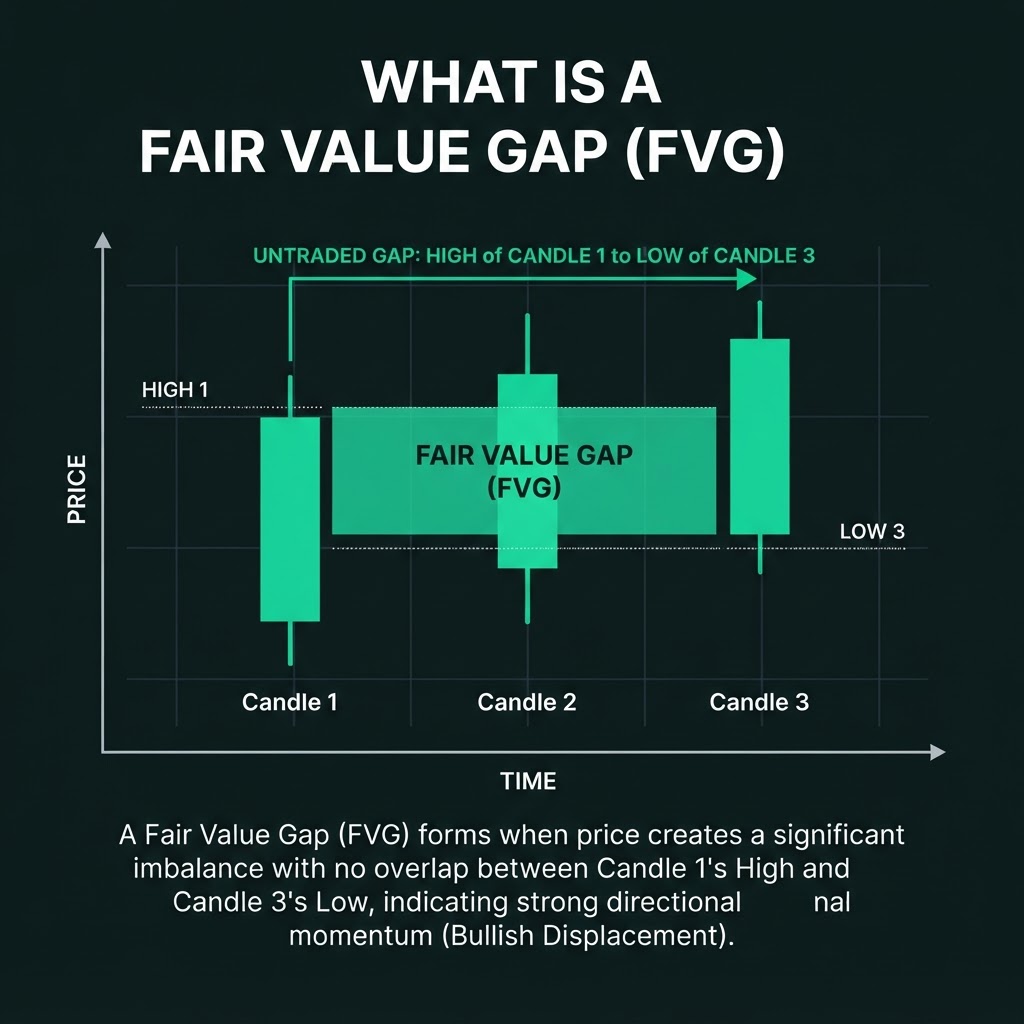
Markets usually auction in both directions, allowing buyers and sellers to transact across a range of prices. During an aggressive move, however, price can travel so quickly that trading activity becomes one-sided. A fair value gap, or FVG, is a three-candle price imbalance used to visualize that inefficient delivery.
In a bullish FVG, the high of the first candle is below the low of the third candle. The space between those prices was skipped by the surrounding wicks. In a bearish FVG, the first candle's low remains above the third candle's high.
Bullish and Bearish Gaps
A bullish gap is created by upward displacement and may act as support if price later returns. A bearish gap is created by downward displacement and may act as resistance. The gap is not a conventional weekend gap; it is an imbalance visible inside continuous candlestick data.
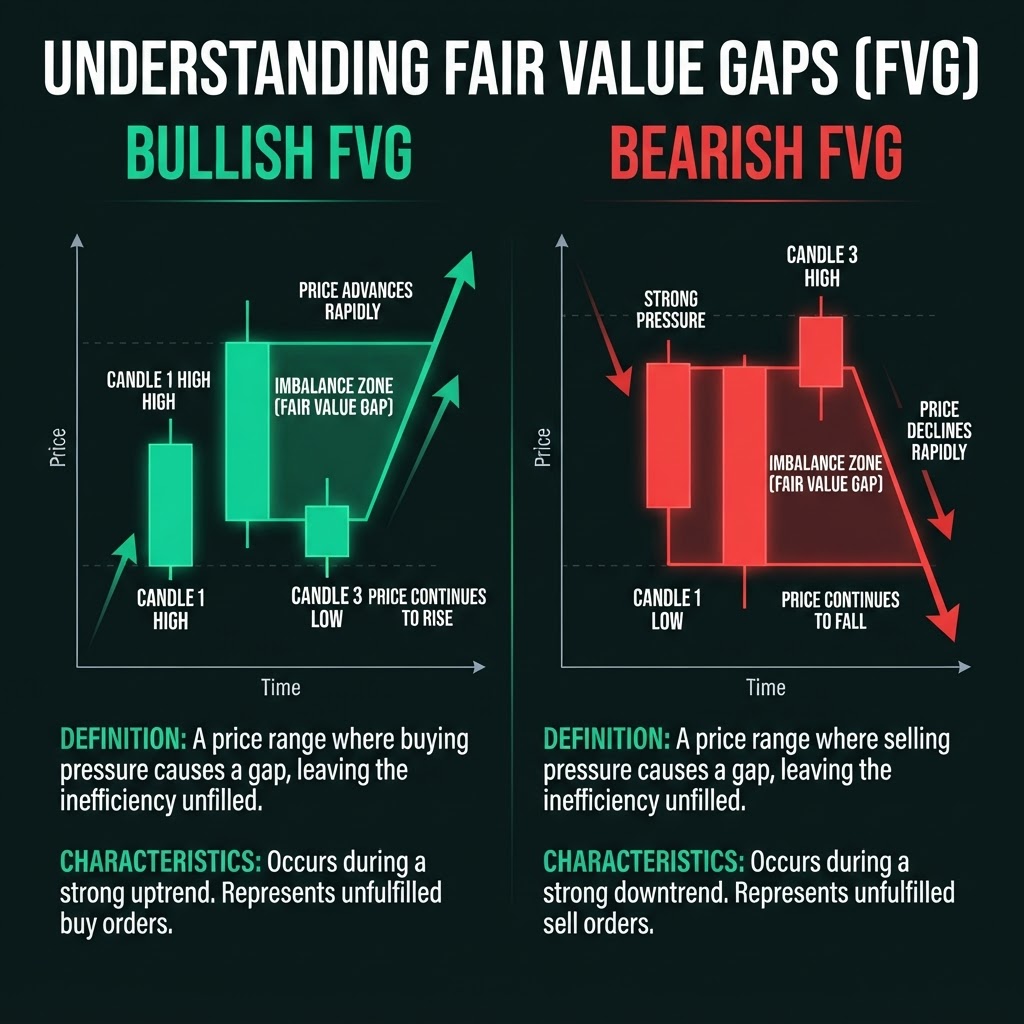
Mark the full zone and its midpoint. Some traders call the midpoint the consequent encroachment level. Price may touch the edge, reach the midpoint, fill the entire zone, or ignore it. No single response is guaranteed.
The Mitigation Setup
A higher-quality setup begins with context. First define the higher-timeframe trend. Then look for displacement that breaks meaningful structure and leaves an FVG behind. Instead of chasing the impulse, wait for price to retrace into the imbalance.
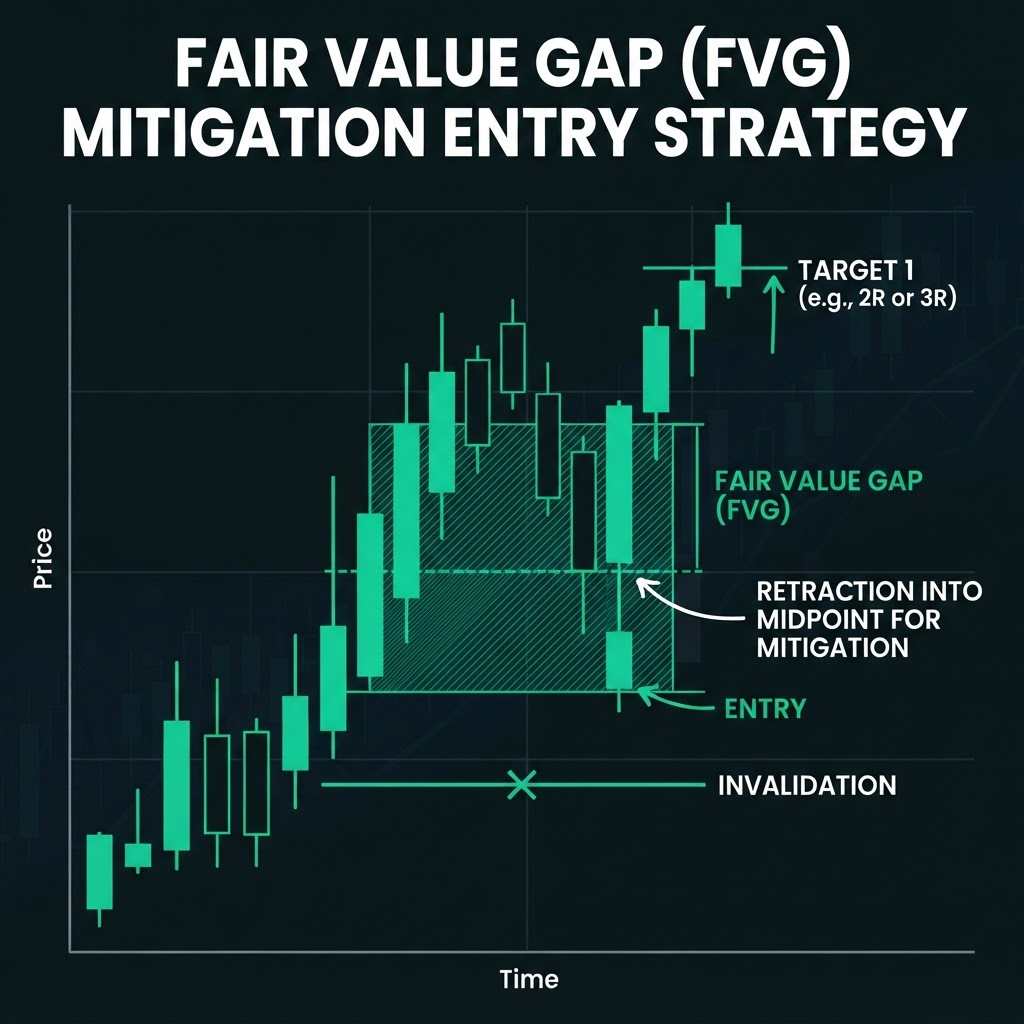
For a bullish setup, confirmation could include a rejection candle, a lower-timeframe bullish structure shift, or fresh displacement from the zone. Invalidation normally sits beyond the swing that created the move, not at an arbitrary number of pips. Targets can be prior highs, external liquidity, or a fixed multiple of risk.
Quality Filters
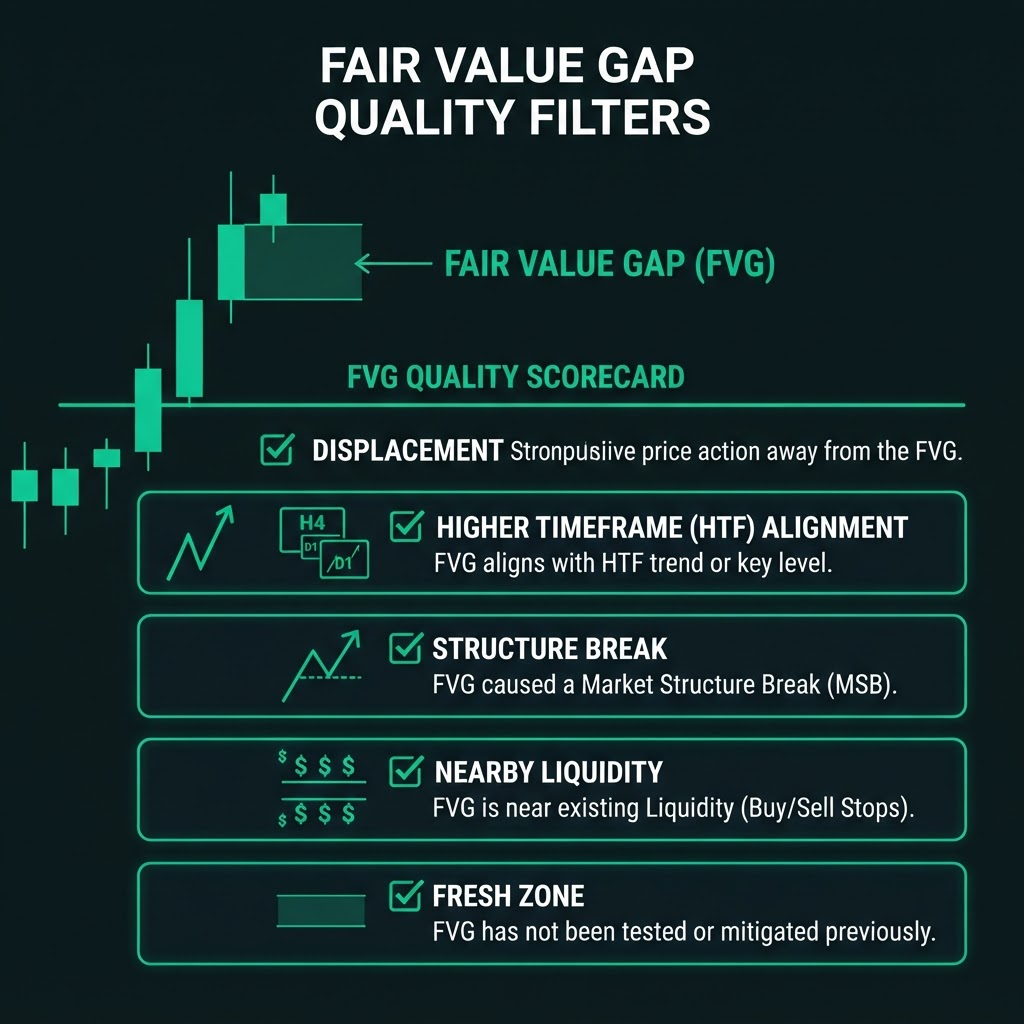
Not all gaps deserve attention. A tiny imbalance in the middle of a noisy range carries less information than a clean gap produced by strong displacement at an important level.
Useful filters include:
- Alignment with the higher-timeframe direction.
- A clear break of structure.
- Strong candle bodies and limited overlap.
- Formation near support, resistance, or liquidity.
- A fresh zone that has not been repeatedly traded through.
- Enough distance to the target for a favorable reward-to-risk ratio.
Common Errors
The first mistake is marking every three-candle space. This produces a cluttered chart and weakens decision quality. The second is assuming all gaps must fill. Markets can continue without returning, particularly during powerful macro repricing. The third is placing an order blindly inside a gap without considering structure or risk.
A Simple Testing Plan
Choose one currency pair and one timeframe. Define the gap objectively, record whether it followed a structure break, and test the first return only. Track entry depth, invalidation, maximum favorable excursion, and result over at least 100 examples. This converts an attractive chart concept into measurable evidence.
Final Takeaway
A fair value gap is evidence of rapid, one-sided price delivery. Its value comes from combining it with trend, structure, location, confirmation, and disciplined risk—not from treating every imbalance as a guaranteed magnet.