Liquidity Sweeps and Stop Hunts: Reading the Market Beyond the Breakout
Liquidity Sweeps and Stop Hunts: Reading the Market Beyond the Breakout
Why Liquidity Matters
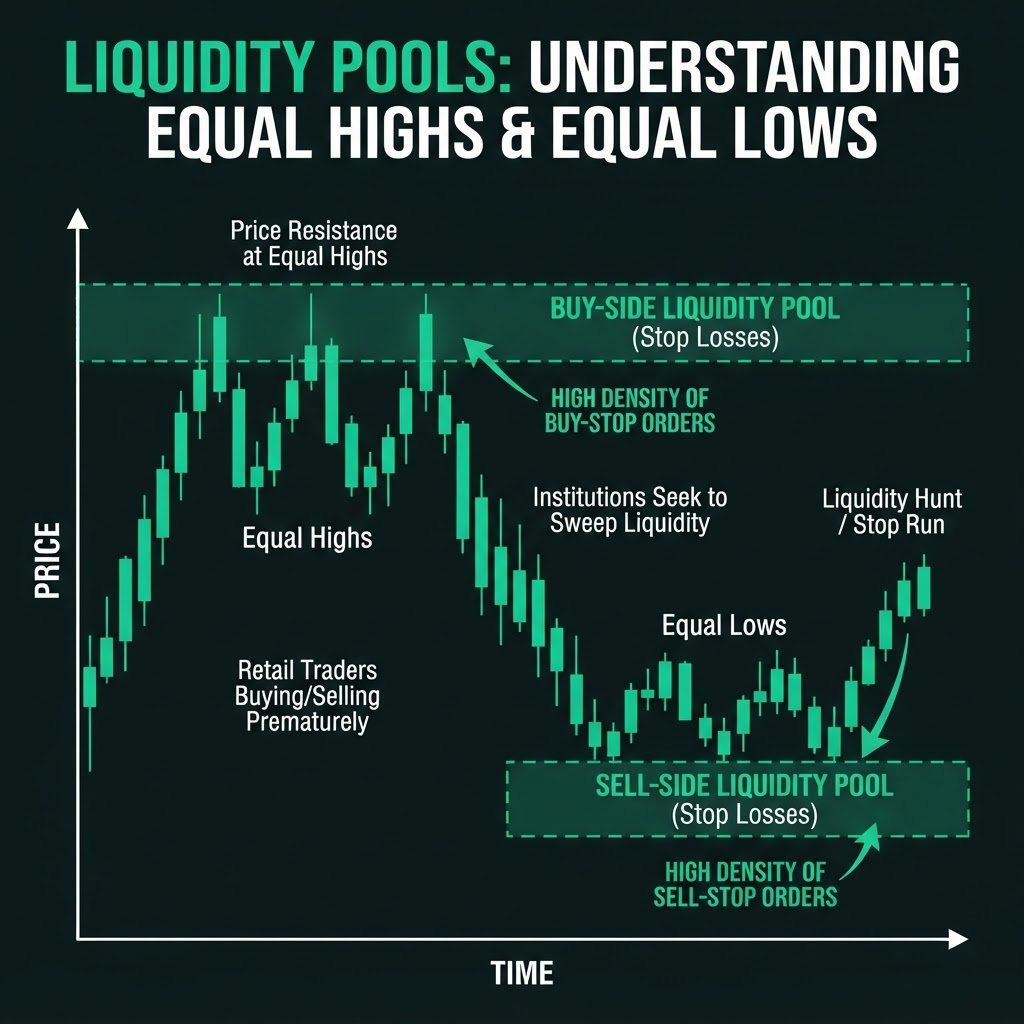
Every transaction needs a buyer and a seller. Large market participants cannot enter or exit substantial positions at one price unless enough opposite orders are available. This is why price is often drawn toward areas where many orders are concentrated. In forex, those areas commonly sit above obvious swing highs and below obvious swing lows.
Retail traders often place buy stops above resistance and sell stops below support. Protective stops collect in the same locations. Together, these orders create liquidity pools that can support institutional execution.
What Is a Liquidity Sweep?
A liquidity sweep occurs when price briefly trades beyond a well-watched level, activates clustered orders, and then returns through that level. The move may look like a breakout at first, but the failure to hold beyond the boundary changes its meaning.
A bullish sweep usually trades below equal lows or a prior swing low before closing back above the level. A bearish sweep trades above equal highs or a prior swing high before closing back below it.
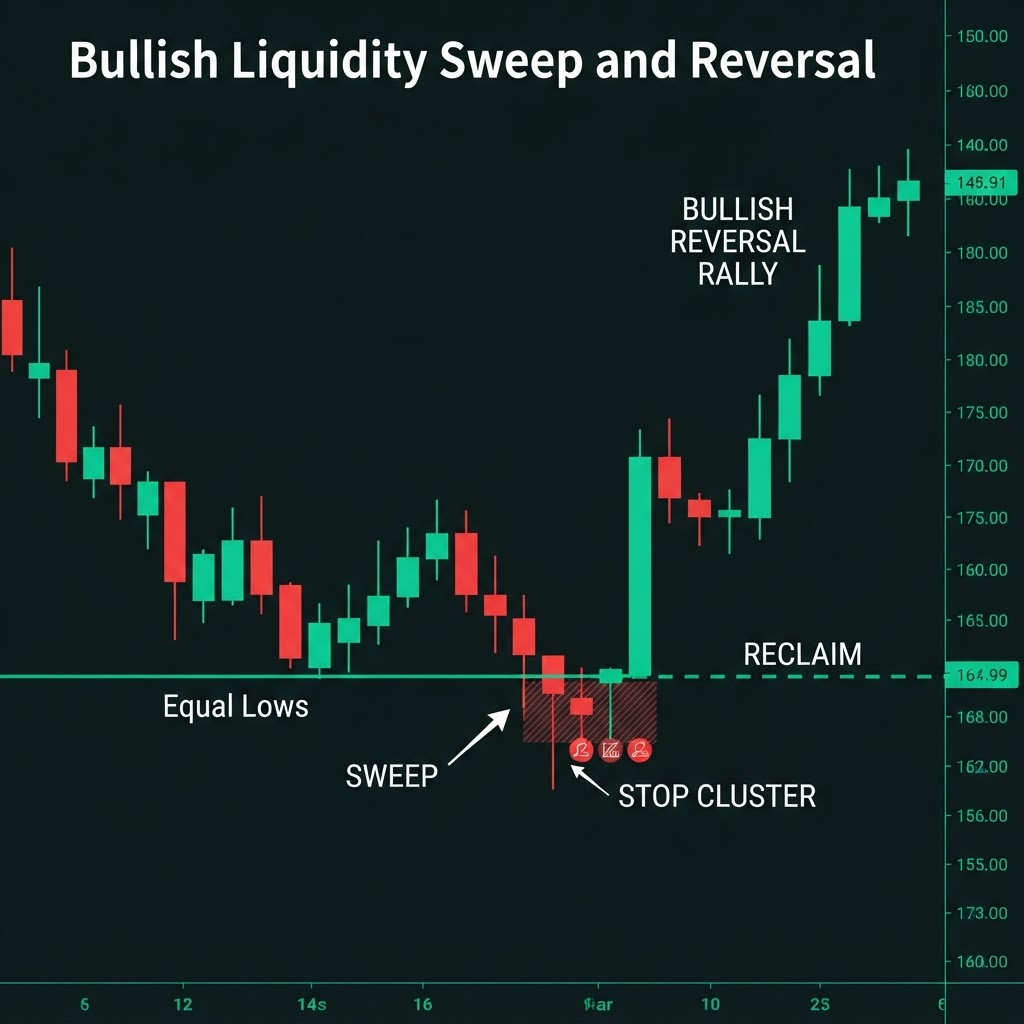
The wick alone is not enough. Traders should look for a reclaim, strong displacement away from the swept area, and a change in lower-timeframe structure. These elements show that the auction rejected the new price rather than accepting it.
Bearish Sweep Example
Suppose EUR/USD forms three similar highs beneath resistance. Breakout buyers place entries above those highs, while short sellers place stops in the same area. Price spikes through the cluster during an active session, but the candle closes back below resistance. A later break beneath the most recent higher low provides structural confirmation that buyers lost control.
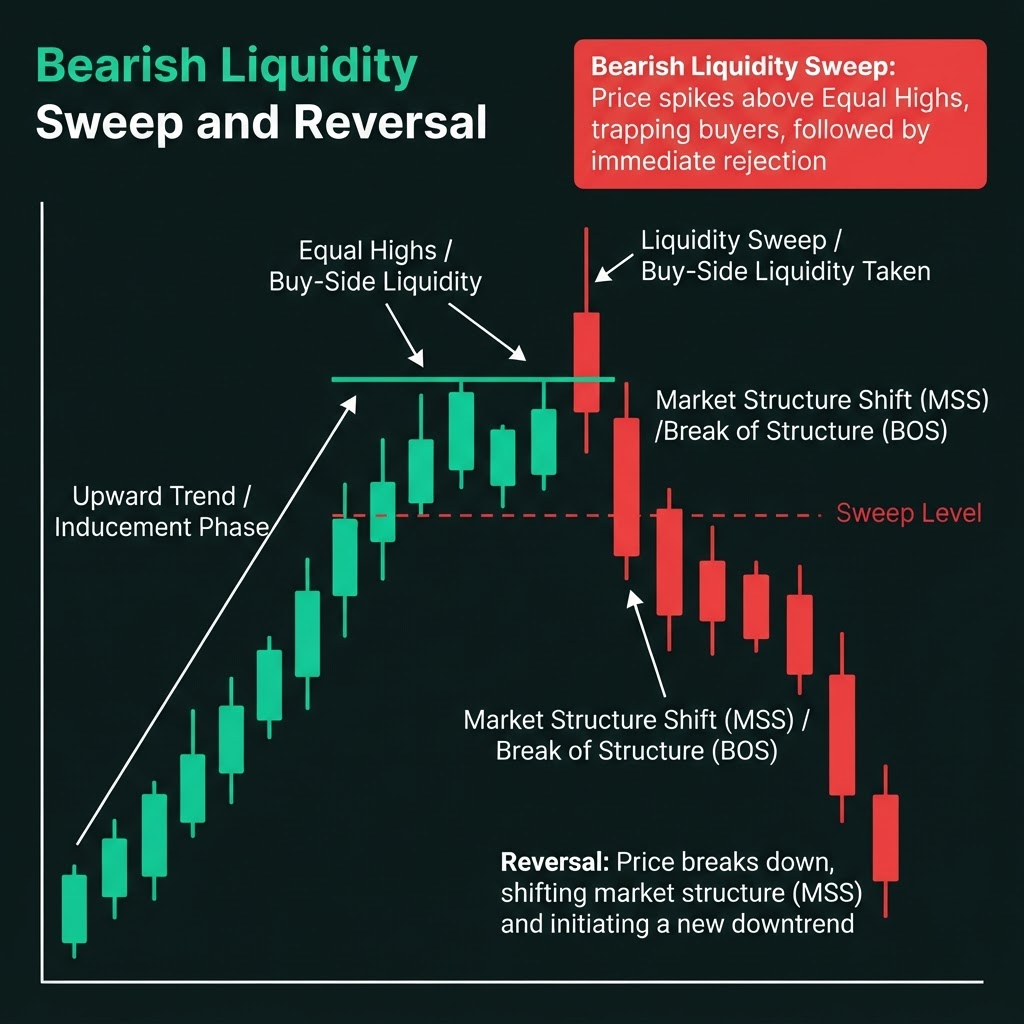
A possible entry may appear on a retest of the reclaimed level or a nearby imbalance. The invalidation point belongs beyond the sweep high. The next opposing liquidity pool can provide a logical target.
Sweep or Real Breakout?
A genuine breakout normally shows acceptance beyond the level: decisive closes, follow-through, and successful retests. A sweep shows rejection: a quick excursion, weak acceptance, and a close back inside the previous range.
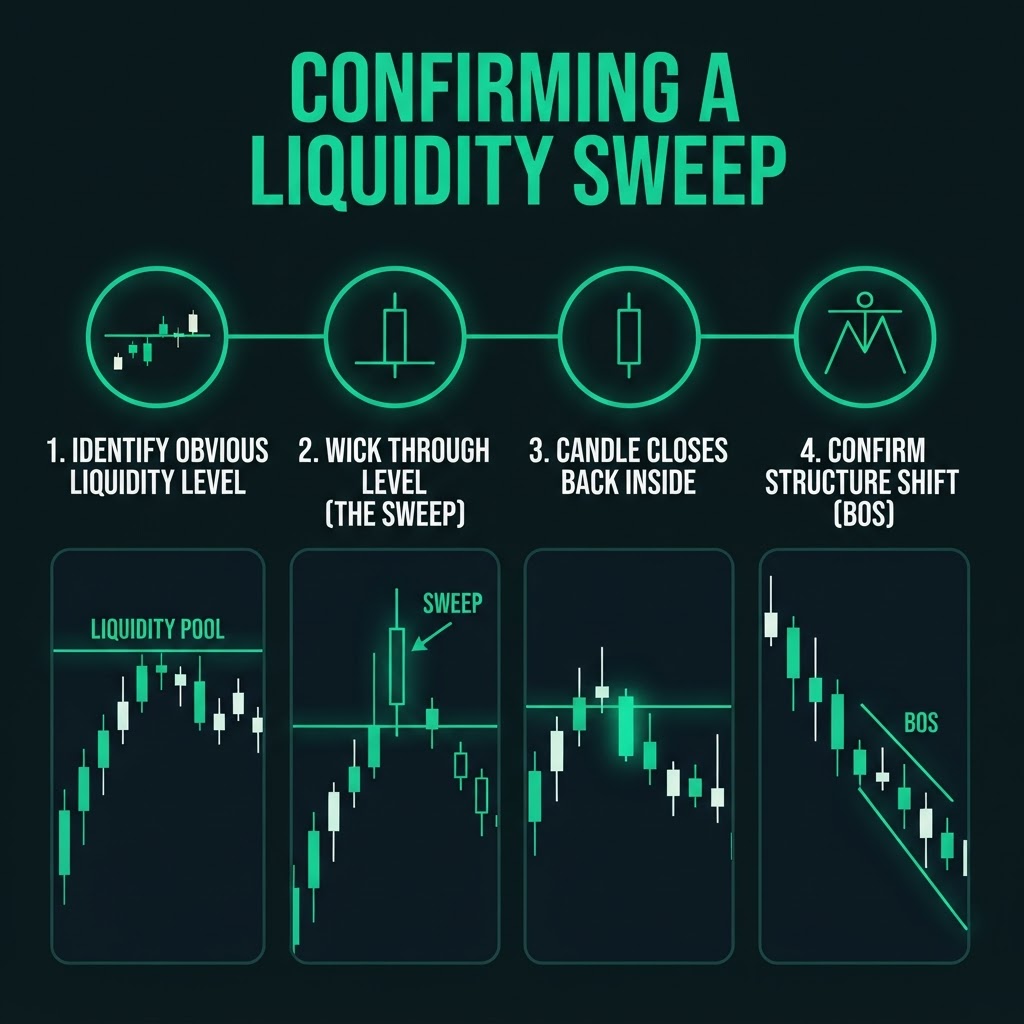
Use this confirmation sequence:
- 1Identify an obvious pool of stops.
- 2Wait for price to trade through it.
- 3Require a close or decisive move back inside.
- 4Look for displacement and a structure shift.
- 5Enter only when the available reward justifies the risk.
Risk Management
Sweeps are context-dependent, not automatic reversal signals. A level may be swept several times before price turns, and strong fundamental flows can convert an apparent sweep into a sustained breakout. Risk a fixed fraction of capital, avoid entering solely because of a long wick, and account for spreads around news releases.
Final Takeaway
Liquidity analysis helps explain why price frequently moves beyond obvious levels before reversing. Mark the orders that are likely resting around structure, wait for rejection and confirmation, and treat the sweep as a setup framework rather than a prediction.