Central Banks and Interest Rates: The Engine of Forex
Central Banks and Interest Rates: The Engine of Forex
Introduction: Central Banks as the Engine of Forex
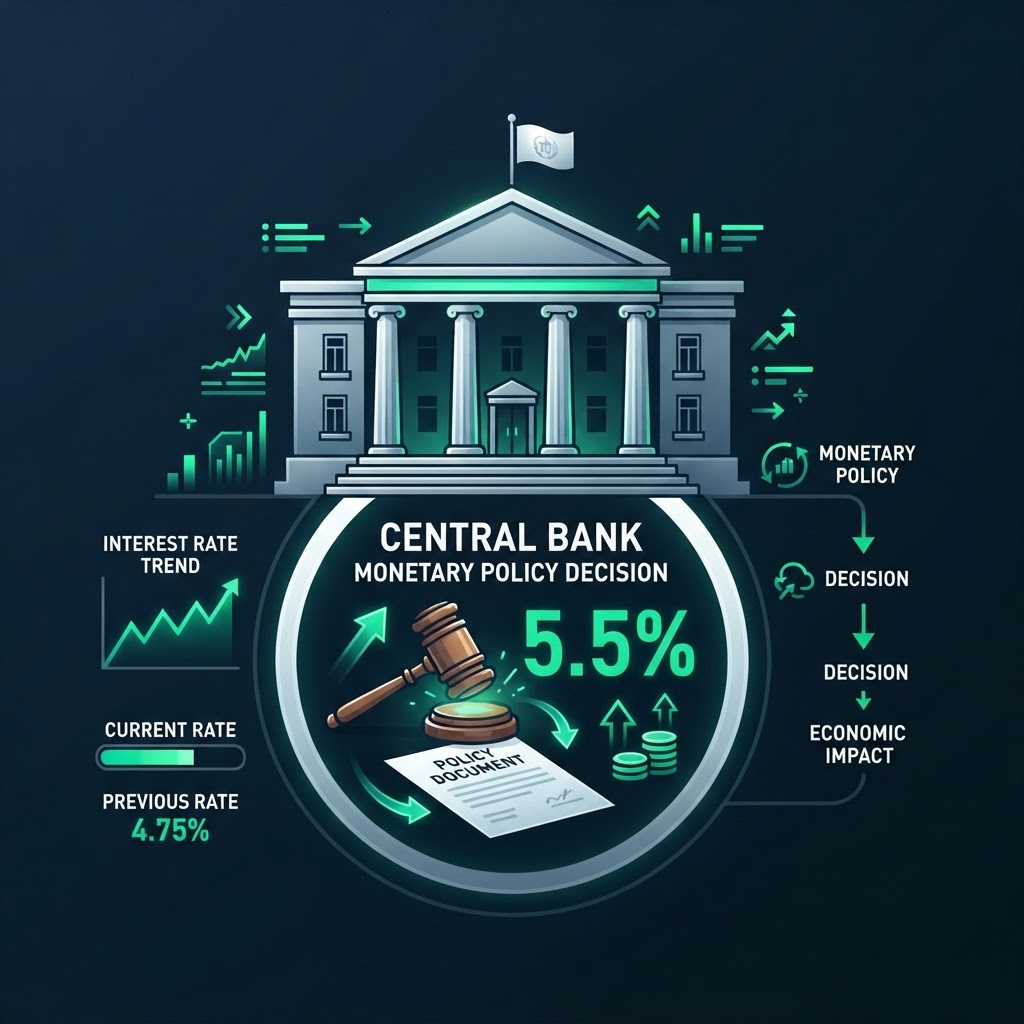
In the vast, decentralized world of the Foreign Exchange (Forex) market, where trillions of dollars change hands daily, the primary driver of long-term trends is not technical chart patterns or retail sentiment, but the deliberate actions of central banks. Central banks are the architects of monetary policy, and their decisions regarding interest rates act as the heartbeat of the global financial system.
For a currency trader, understanding central banks is akin to a captain understanding the tides. If you trade against the tide set by a central bank, you are likely to be swept away. If you align your strategy with the prevailing monetary policy, you gain the "wind at your back." This article explores the mechanics of how central banks influence currency values, the nuances of monetary policy, and how traders can translate these high-level economic shifts into practical market strategies.
The Role of Central Banks in the Economy
Central banks—such as the Federal Reserve (Fed) in the U.S., the European Central Bank (ECB), and the Bank of Japan (BoJ)—are the institutional pillars of a nation’s economy. Unlike commercial banks, which serve individuals and corporations, a central bank serves the state and the broader financial system.
Their mandate typically includes two primary goals: maintaining price stability (controlling inflation) and fostering maximum sustainable employment. To achieve these, they wield the "levers" of monetary policy:
- 1 Setting Short-Term Interest Rates: By adjusting the cost of borrowing, central banks influence how much money is spent, saved, or invested by businesses and consumers.
- 2 Managing the Money Supply: By buying or selling government securities, they inject or withdraw liquidity from the system.
- 3 Acting as Lender of Last Resort: During financial panics, they provide emergency liquidity to commercial banks to prevent systemic collapse.
When a central bank changes interest rates, it sends a signal to the entire economy. A hike in rates is a tightening measure intended to cool down an overheating economy and curb inflation. A cut in rates is an easing measure intended to stimulate growth by making borrowing cheaper. These shifts immediately impact the valuation of the national currency, as global investors adjust their portfolios to seek the highest "risk-adjusted" returns.
How Interest Rates Drive Currency Values
To understand why interest rates drive currency values, one must think like a global investor. Money flows to where it is treated best. If a currency offers a higher interest rate, it becomes more attractive to investors, particularly those engaged in "carry trades."
When a central bank raises interest rates, it increases the yield on that country's government bonds and other fixed-income assets. International investors, seeking better returns on their capital, buy that currency to purchase those higher-yielding assets. This increase in demand for the currency leads to appreciation in the forex market.
Conversely, when a central bank cuts interest rates, the yield on domestic assets drops. Investors may look to liquidate their holdings in that currency and move their capital into countries offering better returns. This selling pressure causes the currency to depreciate. Furthermore, lower interest rates usually imply that the central bank is trying to stimulate an economy that may be struggling, which further weakens the currency's appeal.
Interest Rate Differentials and Capital Flows
The absolute level of interest rates is rarely the most important factor for a trader; rather, it is the interest rate differential—the difference between the interest rates of two different countries.
If Country A has an interest rate of 5% and Country B has an interest rate of 1%, capital is incentivized to flow from Country B to Country A. This flow creates a structural shift in supply and demand in the forex market. As capital flows into the currency with the higher yield, the exchange rate for that pair shifts accordingly.
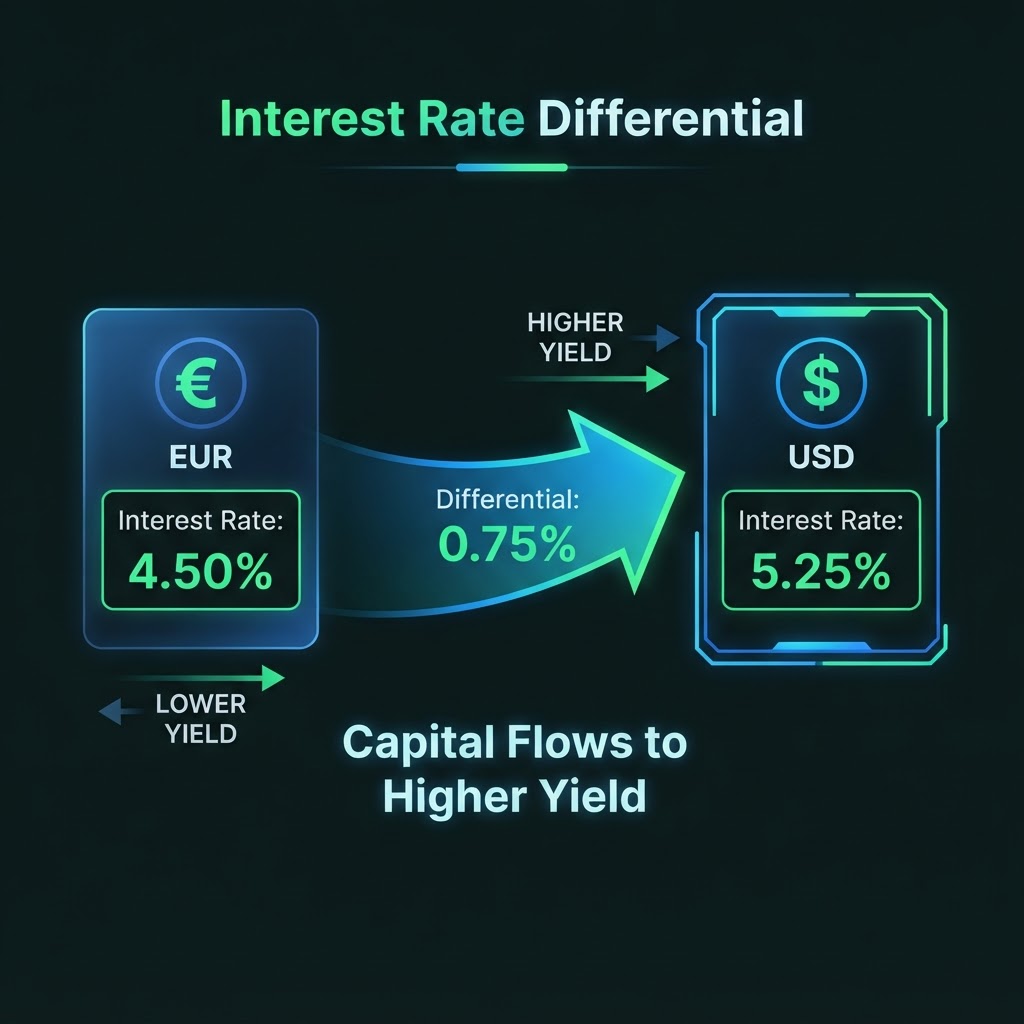
Traders must monitor not just the current differential, but the future trajectory of that differential. If Country A is expected to raise rates while Country B is expected to keep rates steady or cut them, the "spread" will widen. This widening is what professional traders call "the trade." The market moves in anticipation of these changes, often pricing them in well before the official policy announcement is made.
Hawkish vs Dovish Monetary Policy
Central bank communication is a language of its own. Traders spend countless hours parsing the statements of central bank governors, looking for "Hawkish" or "Dovish" signals.
- Hawkish: A "hawk" is a central bank official who prefers higher interest rates to keep inflation in check. When a central bank is described as hawkish, it means they are concerned about rising prices and are likely to raise rates or keep them high. Hawkish sentiment is generally bullish for a currency.
- Dovish: A "dove" is a central bank official who prefers lower interest rates to encourage economic growth and reduce unemployment. When a central bank is described as dovish, it means they are worried about economic stagnation and are likely to cut rates or keep them low. Dovish sentiment is generally bearish for a currency.
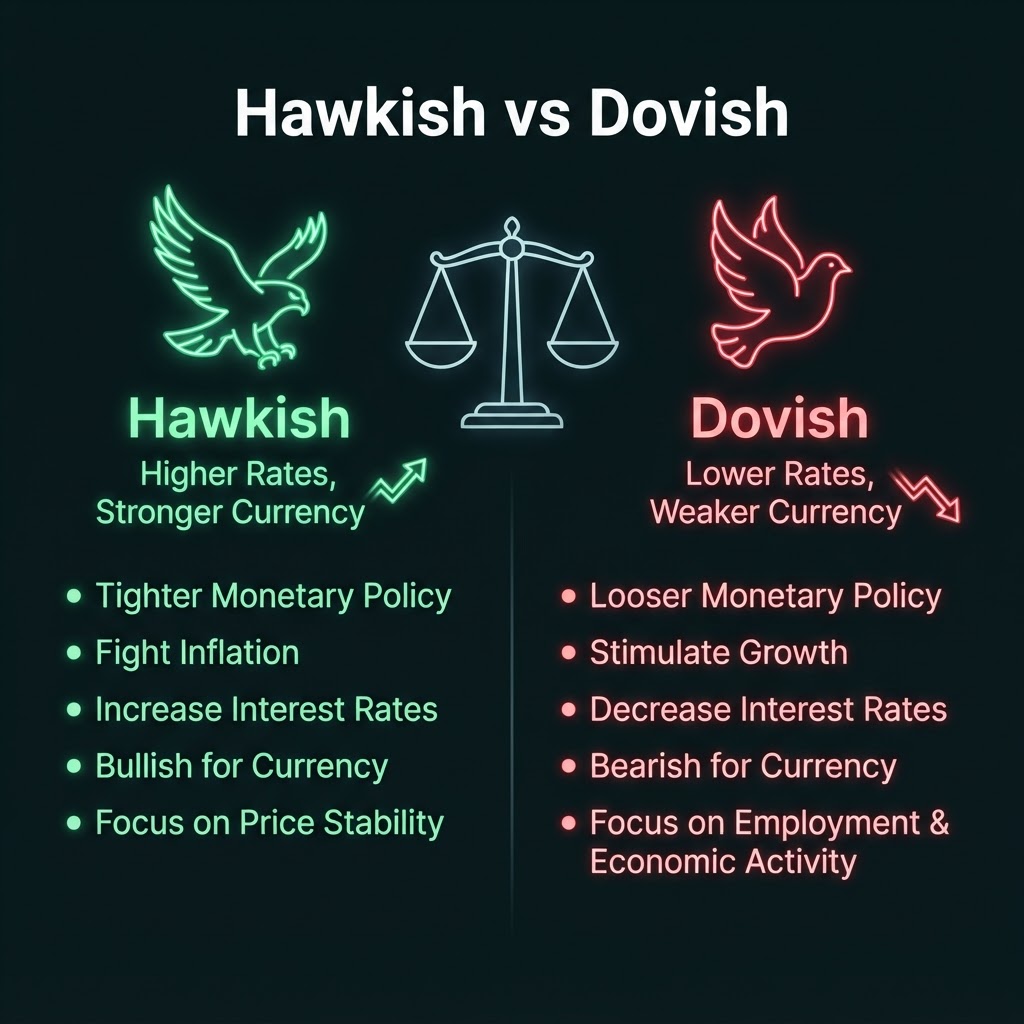
Distinguishing between these two stances is essential. A "neutral" central bank may leave rates unchanged but leave the door open for future hikes (a hawkish lean) or cuts (a dovish lean). Traders must read the "dot plot" (the Fed’s projection of future rates) and the official policy statements to discern the underlying bias.
Quantitative Easing and Quantitative Tightening
Beyond simple interest rate adjustments, central banks utilize unconventional tools when traditional methods reach their limits. These are known as Quantitative Easing (QE) and Quantitative Tightening (QT).
- Quantitative Easing (QE): During severe economic downturns, when interest rates are already near zero, central banks print money to buy long-term securities, such as government bonds and mortgage-backed securities. This increases the supply of money, pushes down long-term interest rates, and aims to stimulate lending. Increased supply of currency in the market usually acts as a negative catalyst for the currency's value.
- Quantitative Tightening (QT): This is the reverse of QE. The central bank stops reinvesting the proceeds from its maturing bond holdings, effectively allowing its balance sheet to shrink. This acts as a withdrawal of liquidity from the system, which can exert upward pressure on interest rates and is typically positive for the currency.
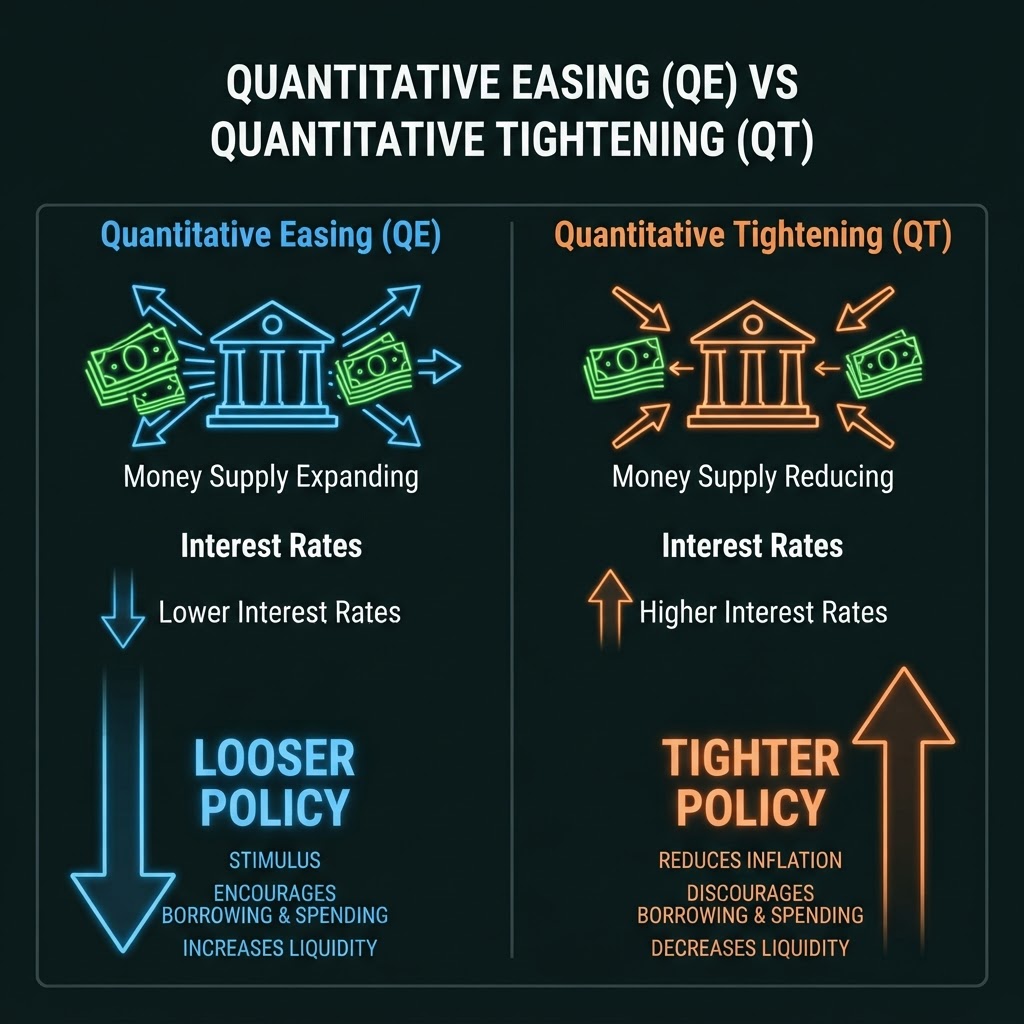
Understanding whether a bank is currently expanding its balance sheet (QE) or reducing it (QT) is critical for understanding the medium-term supply dynamics of a major currency.
Major Central Banks Every Forex Trader Should Know
Successful forex traders do not attempt to follow every central bank in the world. Instead, they focus on the "G7" central banks, whose currencies account for the vast majority of global volume:
- 1 Federal Reserve (Fed) - USA: The most influential central bank. The USD is the global reserve currency, meaning Fed policy affects almost every trade.
- 2 European Central Bank (ECB) - Eurozone: Manages the EUR, the second most liquid currency. ECB policy is highly sensitive to the economic health of the EU's member nations.
- 3 Bank of Japan (BoJ) - Japan: Known for its unconventional policies and historically low (or negative) interest rates. The JPY is a primary "funding currency" in the carry trade.
- 4 Bank of England (BoE) - UK: Highly reactive to inflation data and financial sector health in London.
- 5 Swiss National Bank (SNB) - Switzerland: Often intervenes in markets to prevent the CHF from becoming "too strong," which is unique compared to other major banks.
- 6 Reserve Bank of Australia (RBA) & Reserve Bank of New Zealand (RBNZ): These "commodity-sensitive" banks often move in lockstep with global trade and commodity cycles.
- 7 Bank of Canada (BoC): Heavily influenced by the price of oil and the economic health of the United States.
Trading Central Bank Events: Strategies and Tips
Trading central bank decisions (like Fed rate announcements) is high-risk, high-reward. The volatility surrounding these events is legendary. Here are strategies to navigate them:
- Don’t Trade the Noise, Trade the Trend: The initial reaction to a news release is often a "whipsaw" as algorithms battle for liquidity. Wait for the dust to settle—usually 30 to 60 minutes after the announcement—before looking for an entry.
- Watch the "Forward Guidance": The actual rate change is often priced in by the market weeks ahead of time. The real move happens based on the central bank’s future outlook (the forward guidance). If the central bank raises rates but signals they are done, the currency might actually drop.
- Monitor Economic Data: Central banks act on data. Before a policy meeting, pay close attention to CPI (Inflation), Unemployment/NFP, and GDP releases. If the data is consistently strong, the central bank is more likely to be hawkish.
- Manage Risk with Position Sizing: Volatility is extreme during policy events. Reduce your position size significantly compared to your "normal" trades to ensure that a massive wick doesn't blow out your account.
- Use Stop-Loss Orders Carefully: During extreme volatility, "slippage" can occur, where your stop-loss is filled at a price worse than you requested. Be aware of your broker's policy regarding slippage during major news.
Conclusion
Central banks are the undisputed masters of the forex market. By controlling interest rates, managing liquidity, and guiding economic expectations, they create the tides upon which all currency pairs move. For the retail trader, success is not found in predicting the next one-minute move of a central bank announcement, but in understanding the broader shift in monetary policy.
When you see a central bank pivot from a dovish stance to a hawkish one, you are witnessing the beginning of a potential trend that could last for months or years. By aligning your trading strategy with the "engines" of the global economy—the central banks—you move from merely guessing at price action to trading in harmony with the most powerful forces in the financial world. Study their statements, respect their influence, and always stay cognizant of the rate differential—the ultimate measure of a currency’s true value.